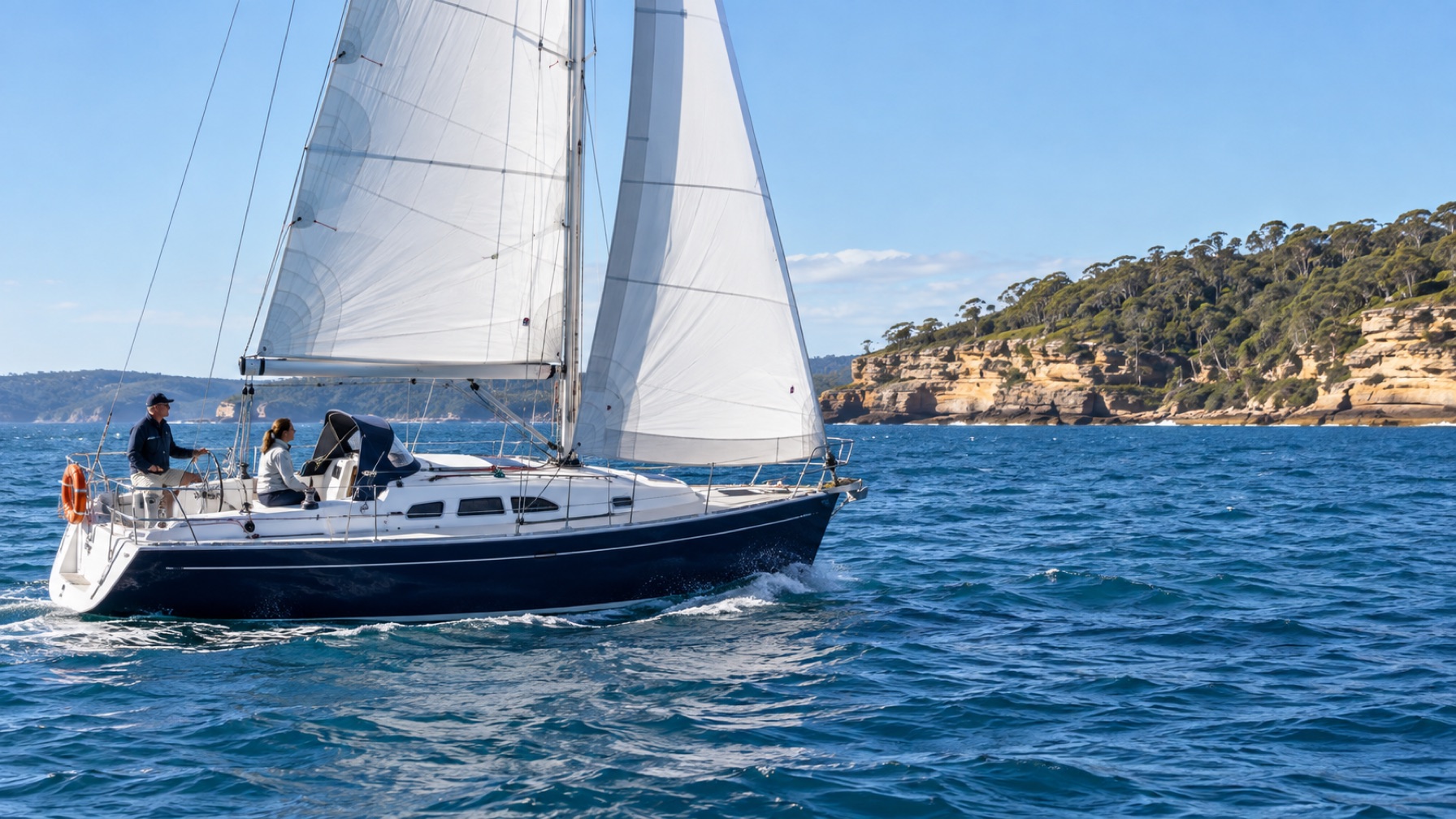
Short answer: Prioritise UV covers, thread, exposed-edge protection, chafe control and a realistic cleaning and storage routine. Choose sail area around Moreton Bay use and any coastal cruising north or south.
A useful local guide does not pretend every Brisbane boat needs the same sail. Start with boat-specific measurements and use regional conditions to test whether the proposed cloth, area, reefing and protection match the sailing you actually do.
Useful terms: UV cover, crossover and chafe.
Translate local conditions into a specification
Warm conditions and strong solar exposure accelerate ageing even when sails appear clean. Bay sailing can include shallow-water chop, sea breezes and frequent manoeuvring; coastal cruising brings longer reaching legs and squall planning. Reliable reduction systems should be part of the purchase, not added later.
Build the brief from real sailing records where possible. Note the wind range in which the boat feels underpowered, balanced and overpowered; the points of sail used most; and the moments when the crew avoids setting or changing a sail. This evidence is more useful than choosing solely from a climate label.
Plan the whole inventory
Many cruising crews favour a manageable furling headsail, a mainsail with accessible reefs and a light-air reaching sail for hot, softer days. Boats heading into stronger trades should avoid designing every sail only for sheltered bay conditions. Racing programs should define how heat and frequent use affect expected service hours.
Draw a simple crossover chart for mainsail reefs, working headsails and reaching or downwind sails. Mark where two sails duplicate one another and where no safe, efficient option exists. Then set the next purchase around the largest genuine gap.
UV, moisture and storage
Specify acrylic or coated UV protection by product, side and colour, plus UV-resistant thread and reinforcement at cover terminations. Check whether the mainsail cover fully shields the leech and clew. Wash salt, dry before bagging and inspect stitching before the cloth itself looks damaged.
Ask the loft to identify every exposed panel when sails are furled or covered. Specify sacrificial materials and thread, then include annual inspection and cleaning in the ownership cost. The best protection is the one that is fitted correctly and checked before structural cloth is affected.
Compare sailmakers and loft service
Ask whether the loft measures at your marina or club, how travel is charged and how quickly exposed UV strips can be replaced. Local repair access can materially change lifecycle cost for sails kept rigged throughout the year.
Obtain comparable written quotes. Each should identify finished dimensions and area, exact cloth, construction, reinforcements, hardware, covers, measurement, fitting, freight, warranty and adjustment process. A lower total can be poor value if essential commissioning or protection is excluded.
Photograph the sail fully furled from both sides in bright light. Small white triangles at the head or clew identify exposure that should be corrected in the new cover design.
Shortlist checklist
- Describe the actual local and passage sailing program
- Record rig, deck hardware, furlers and all modifications
- Set target wind and angle ranges for every sail
- Compare exact cloth and finishing rather than generic names
- Confirm UV, chafe, moisture and storage protection
- Agree on measurement, fitting, adjustment and warranty responsibility
Frequently asked questions
Does darker UV-cover fabric get hotter?
Colour affects heat and appearance, but product construction, UV resistance, thread and fit also matter. Ask the sailmaker about the specific material rather than choosing by colour alone.
Are laminates suitable for Queensland cruising?
Some cruising laminates include protective layers and can work well. Compare UV strategy, repairability and expected exposure with a durable woven option.
How often should a furling cover be inspected?
Inspect it frequently and at least as part of annual sail service. Stitching and edges can fail before the body cloth shows obvious damage.
Reviewed 20 September 2026. This page provides regional context, not live business rankings or a substitute for boat-specific professional advice.