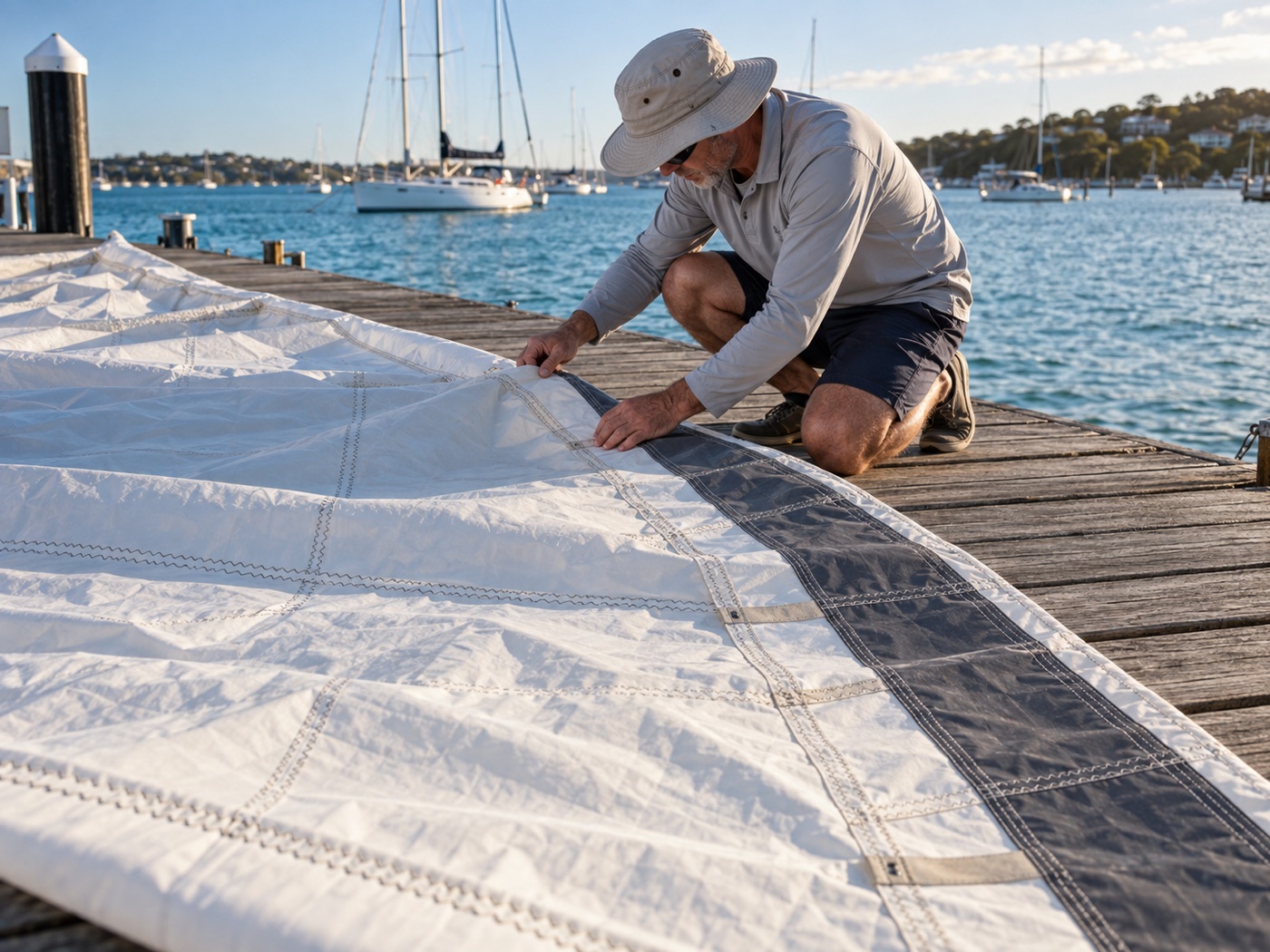
Inspect the sail dry, clean and fully spread in good light. Then, if possible, hoist it on the intended boat. Structural condition and flying shape are separate questions.
1. Confirm physical and functional fit
Measure actual luff, leech and foot. For headsails, record luff tape size, tack and head hardware, LP, clew height and sheeting position. For mainsails, verify slides or bolt rope, headboard, tack, clew, reef locations, batten compression fittings and maximum hoist.
A sail can fit between the attachment points but remain unusable. The clew may miss the track, battens may foul backstays, a UV cover may face inward on the intended furler, or the head may collide with a swivel.
2. Inspect structure systematically
Cloth
- Compare exposed leech and foot with protected cloth inside folds
- Look for chalkiness, pinholes, brittle creases and colour change
- Check mildew staining separately from fibre damage
- On laminates, inspect for bubbles, cloudy film and broken internal fibres
Seams and stitching
Flex the seam gently and look for broken or missing thread. UV-damaged thread can fail before the surrounding cloth. Examine batten pockets, reef rows and the junction between UV cover and sail, where stiffness changes create stress.
Corners and hardware
Look for elongated eyes, cracked rings, corrosion, distorted webbing and abrupt patch edges. Check that reinforcement remains bonded and that stitching has not cut through weakened cloth. Hardware replacement can be sensible; damage radiating into the body may not be.
| Finding | Likely implication | Next action |
|---|---|---|
| Local stitching failure | Often repairable if cloth is strong | Get loft scope and inspect adjacent thread |
| UV cover worn, body sound | Sacrificial layer has done its job | Price full cover replacement |
| Widespread brittle cloth | Structural life is near its end | Replace rather than patch repeatedly |
| Laminate delamination | Bonding failure may spread | Specialist assessment; usually poor purchase |
| Draft deep and aft | Shape loss, not fixed by restitching | Assess recut potential and remaining structure |
3. Check flying shape
Photograph from beneath the middle of the foot looking upward, keeping luff and leech in frame. Take images on both tacks in steady breeze with recorded halyard, backstay, outhaul and sheet settings. Horizontal draft stripes make depth and position easier to see.
Common signs of a tired sail include excessive heel without useful drive, a deep draft that will not move forward with controls, hooked or fluttering leech, unstable entry and poor pointing. Rig tune and trim can imitate these symptoms, so verify controls before condemning the sail.
Repair, recut or replace?
Repair
Repair makes sense when damage is local and the surrounding cloth retains strength and shape: isolated seam failure, a small tear, worn chafe patch, damaged slide or exhausted UV cover.
Recut
A recut may improve a sail that remains structurally sound but has moderate shape distortion. It cannot restore original fibre properties or reverse widespread stretch, brittleness or delamination. Ask the loft what shape change is achievable and how the work affects dimensions.
Replace
Replacement is usually the better value when deterioration is widespread, multiple systems are failing or the sail no longer suits the boat’s use. Add quoted repairs and likely near-term work; compare that total with the useful life and fit of a new sail.
A simple red-flag score
Add one point for each moderate issue and three points for each severe or widespread issue: uncertain dimensions; incompatible hardware; brittle cloth; widespread broken stitching; delamination; damaged corners; exhausted UV cover; poor flying shape; undocumented repair; or no realistic inspection opportunity.
Questions for the seller
- Which boat and rig carried the sail?
- What are the measured finished dimensions?
- How many seasons and what type of sailing?
- Was it stored furled, flaked, bagged, wet or dry?
- Which repairs or recuts have been completed?
- Why is it being sold?
- Can a sailmaker inspect it or can it be hoisted?
Reviewed 14 September 2026