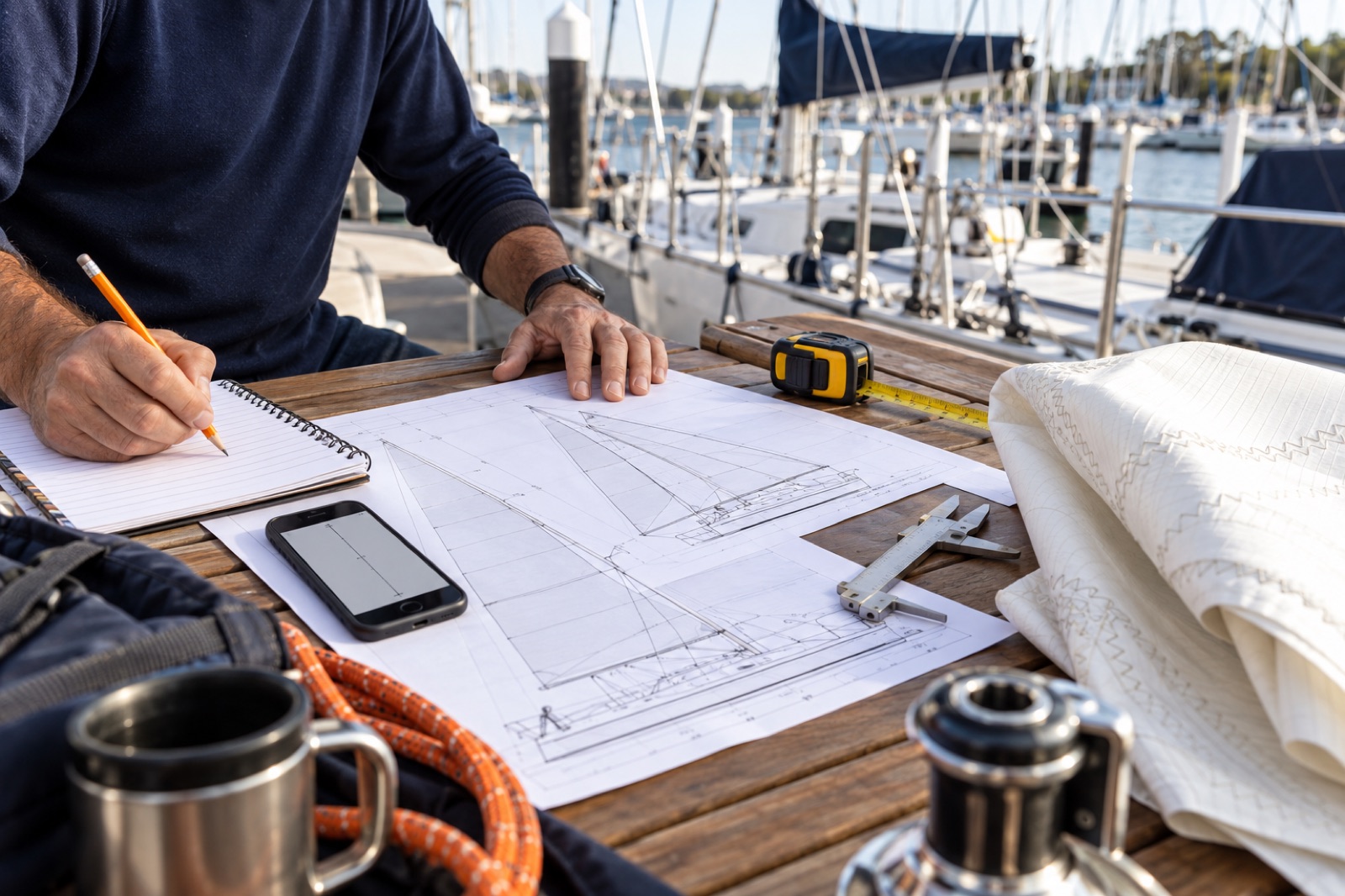
Mainsails, headsails & reaching sails
Understand what each sail does, where their wind ranges overlap and where your boat has a genuine gap.
Browse sail buying guides →Compare new and used yacht sails for Australian cruising and racing. Choose a mainsail, genoa, spinnaker or Code Zero by boat type, sailcloth, measurements, price and local sailing conditions.
 Featured Australian sailmaker
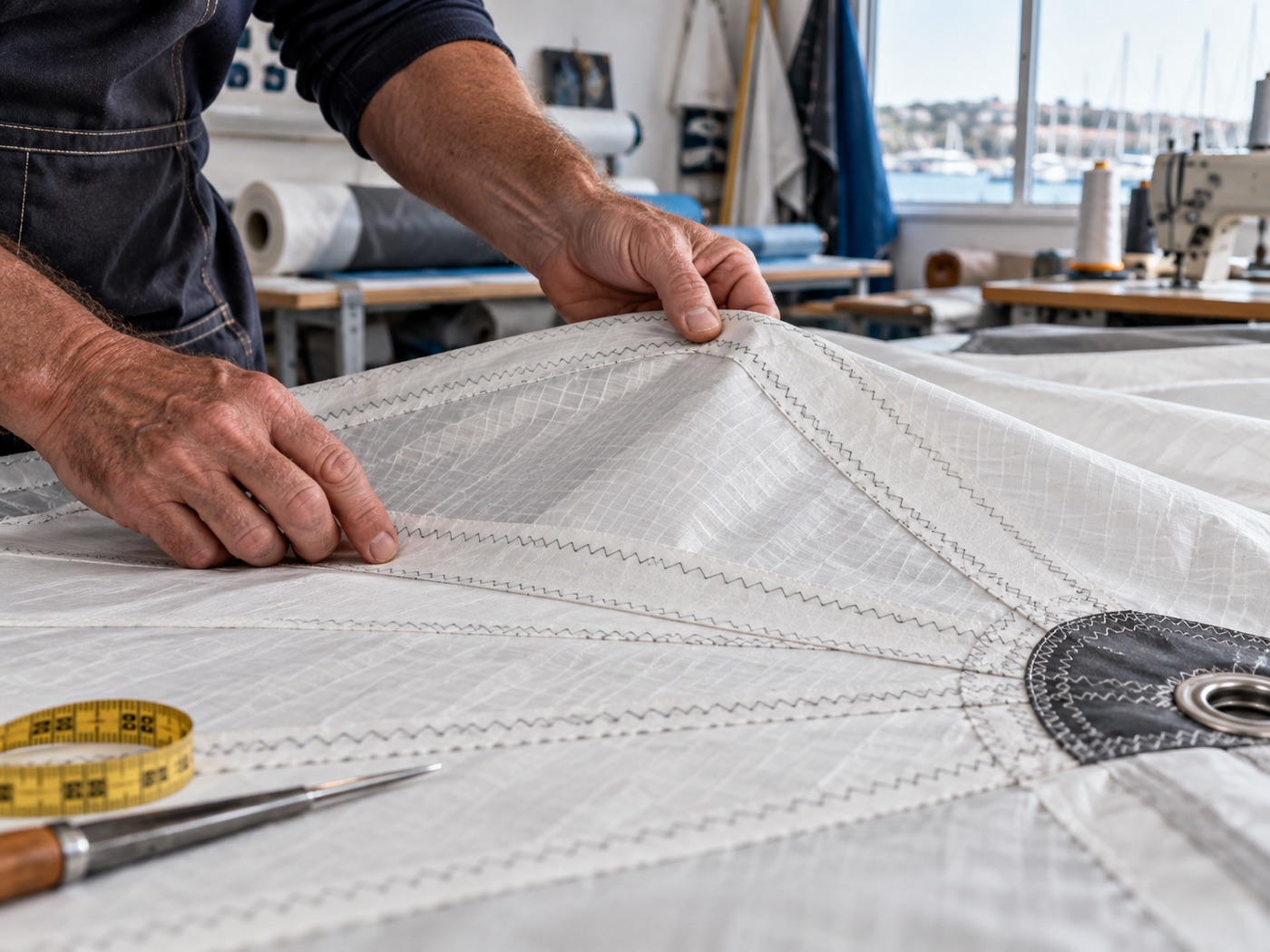
Luke explains measuring responsibility, racing versus cruising construction, offshore upgrades, sailcloth decisions and the warning signs owners should inspect before damage spreads.
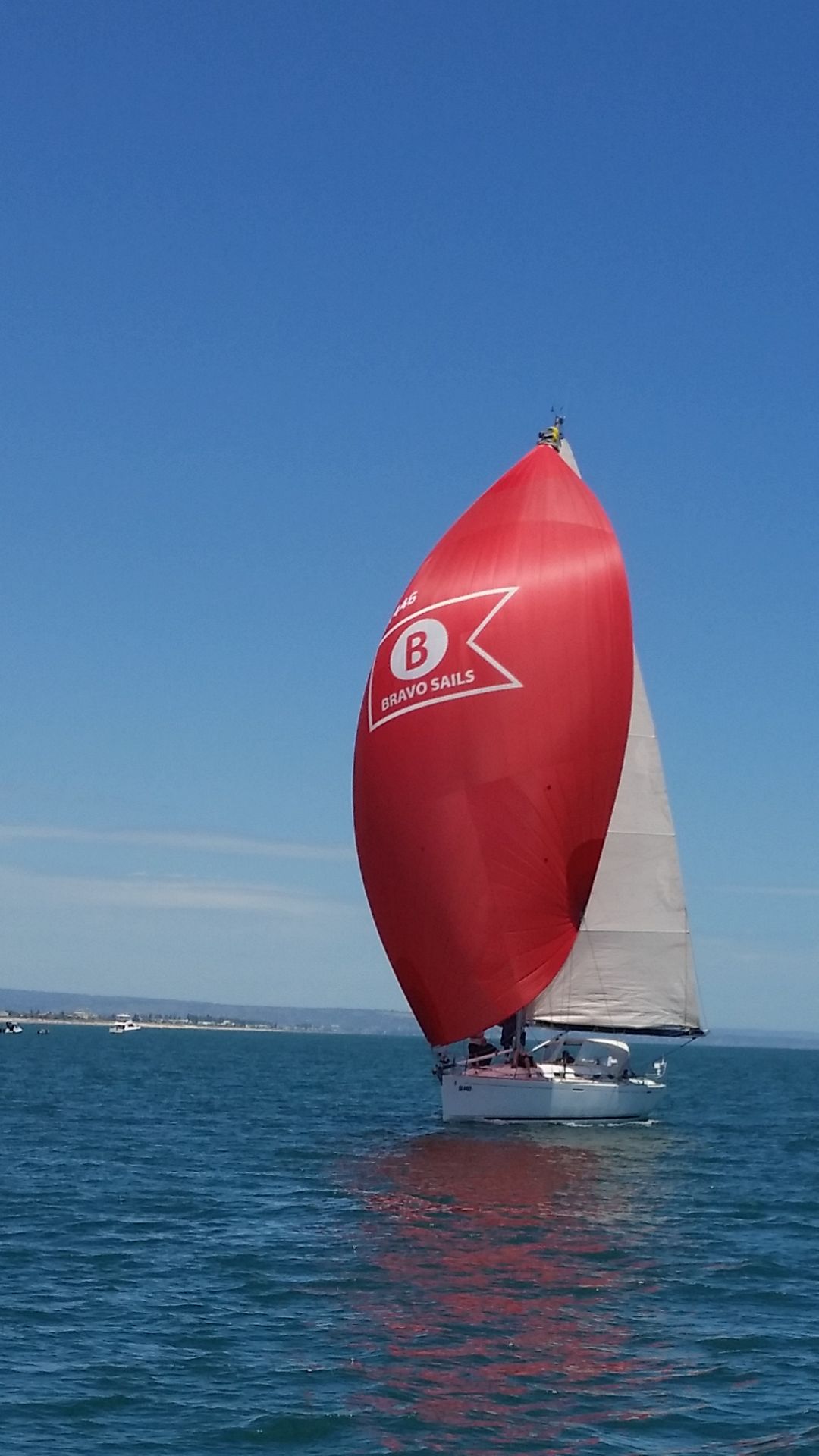
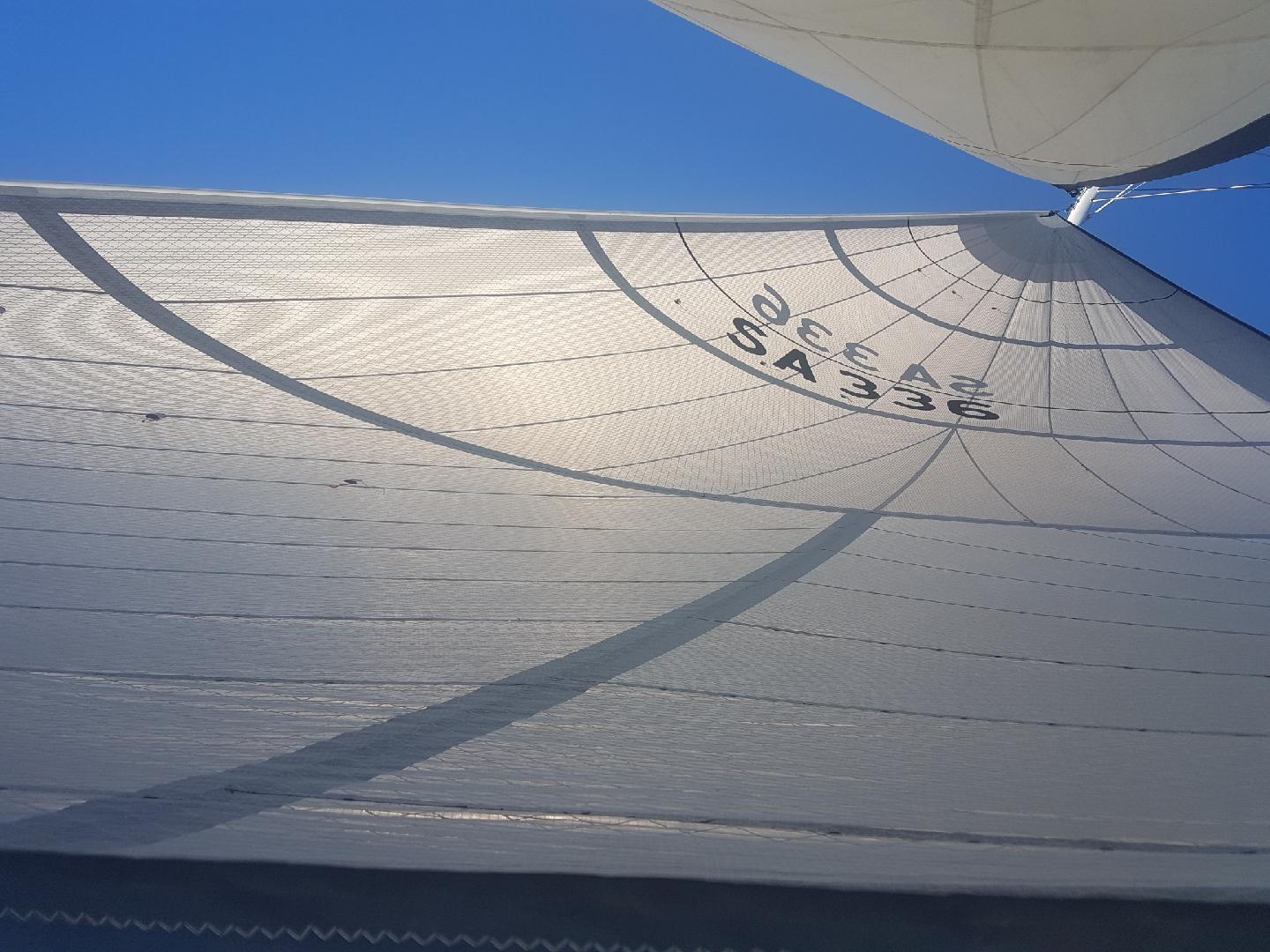
“We talk about how the sail will be used and who will use it. We then measure, design and manufacture it locally.”
Luke · Bravo Sails · Outer Harbor, South Australia
Photography: Bravo Sails. Used from the company’s official website and linked to the original business.
Buying the right yacht sail means matching sail type, size, cloth, construction and handling systems to your boat and sailing program. Compare the complete inventory before replacing one sail in isolation.
Start with the boat’s dimensions, then map the jobs your sails must perform: light-air upwind, fresh-water beating, reaching, running and safe reduction when conditions turn. Your crew size and tolerance for foredeck work matter just as much as a fibre specification.
Use fourteen practical tools with visible formulas, worked examples and custom diagrams—then turn the result into a consistent buying brief.
Follow these yacht sail buying guides from inventory planning and sailcloth selection through measurements, quote comparison and ordering.
In high-exposure Australian waters, cloth choice is only the beginning. Furling-sail UV covers, leech and foot orientation, thread, sacrificial protection, chafe patches and storage routines all affect service life.
Queensland tropical cruising, Bass Strait passages and Sydney Harbour weekends do not produce the same loads or degradation. Our regional guide turns climate and sailing program into practical questions for your sailmaker.
Plan for your region →The best sail is the one that keeps its useful shape, can be handled by the real crew and is ready for the conditions the boat actually meets.
Reliable reefing, durable shape and repairability.
Targeted wind ranges, low stretch and repeatable trim.
Understand what each sail does, where their wind ranges overlap and where your boat has a genuine gap.
Browse sail buying guides →Compare fibres, panel layouts, finishing and the trade-offs between shape retention, durability and price.
Understand construction →Use structural and shape red flags to decide whether money spent on an older sail is likely to deliver value.
Inspect a used sail →Record your boat, rig, current inventory, sailing program, crew and priorities before you request a quote. You’ll get answers that are easier to compare—and a sail better suited to the job.
Open the buyer’s checklist →A Noelex 25, Adams 10, Seawind 1000 and Oceanis 38.1 should not receive the same generic sail recommendation. Work through published context, actual-boat checks and realistic owner scenarios.
Explore real boat examples →