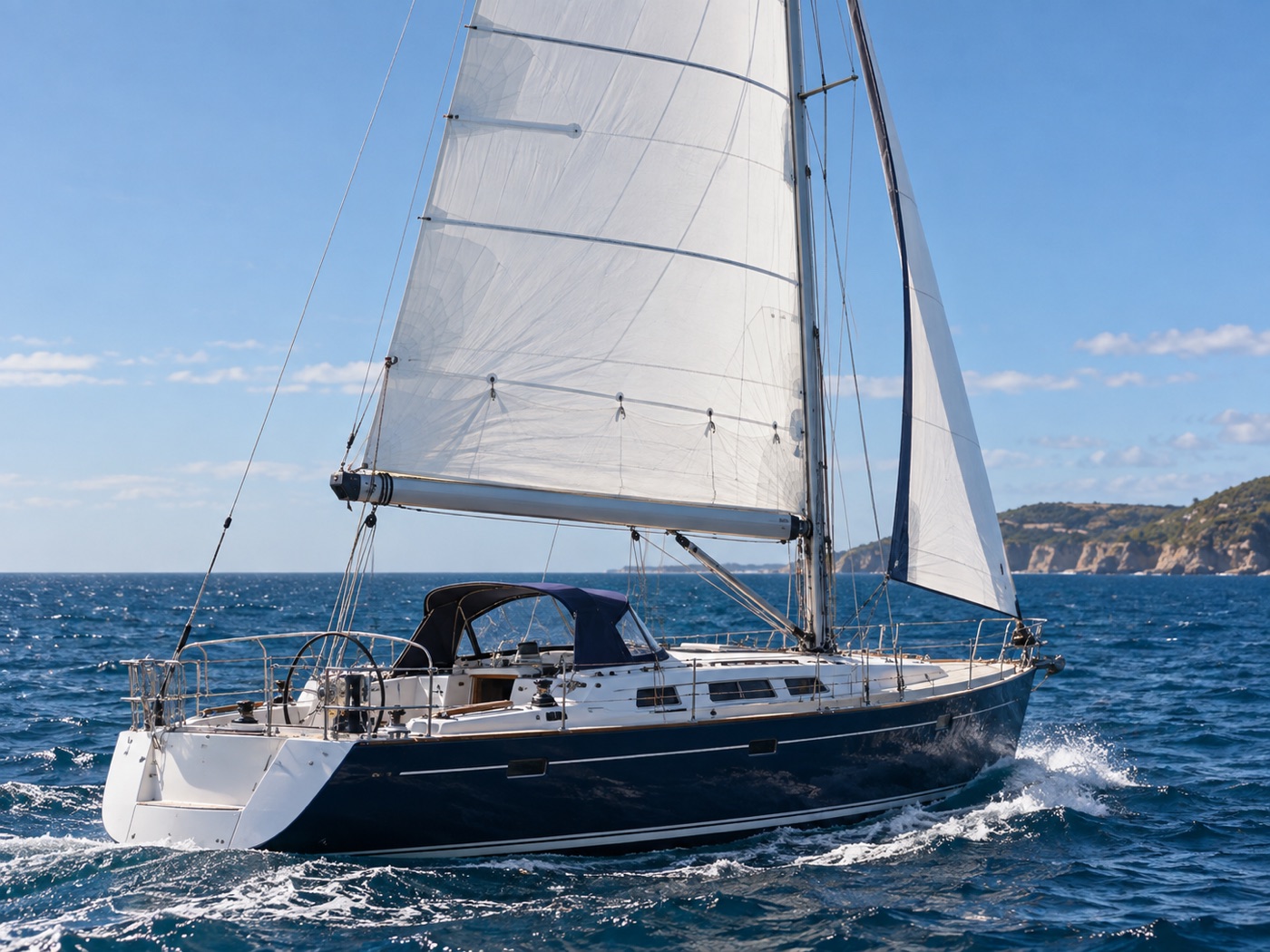
Short answer: a well-reinforced slab-reefing main with two or three useful reefs remains the most versatile choice for many Australian cruising yachts. Furling mains can reduce handling effort, but only when sail geometry and mechanism are treated as one system.
Choose the reefing and handling system first
Slab reefing
Slab reefing gives the designer control over roach, battens and reefed shape. Specify how the luff and clew reef points attach, how the leech clears fittings and whether one person can secure the reef. Lazy jacks, a boom bag and low-friction cars can reduce handling without changing the sail’s basic geometry.
In-mast furling
An in-mast main needs conservative geometry and reliable rolling. Vertical battens may add roach, but they also introduce stiffness and require enough clearance. Ask how halyard tension, boom angle, mast bend and cloth stability affect furling. A sail that looks powerful but jams or wrinkles is not a successful upgrade.
In-boom furling
In-boom systems can retain a more conventional roach and batten layout, but depend on exact luff feed and boom angle. Include the boom manufacturer’s requirements in the quote and test full deployment, partial reefs and recovery from an interrupted furl.
Buying a mainsail by boat type
Cruising monohull
Prioritise controlled reefed shape, durable cloth, chafe protection, practical cars or slides and a deep reef that matches the heavy-weather plan.
Racing yacht
Define rig bend, control response, rating limits and target wind range. Finished weight and repeatable draft position matter alongside outright shape.
Catamaran
High righting moment and a wide traveller create high loads. Reefing should be early and positive; full battens and low-friction cars need correctly engineered compression hardware.
Trailer sailer
Keep hoisting, flaking and storage simple. Partial battens may pack more easily; class dimensions, boom fittings and mast raising routines can limit hardware choices.
Details that change the finished sail
Battens and roach
Full battens support roach and stabilise shape but add compression at the mast. Partial battens are lighter and simpler but offer less support. Ask for batten type, pocket closure and replacement availability, not only the number of battens.
Cloth and construction
Woven polyester remains dependable for cruising and small boats. Radial cruising laminates and load-path sails reduce stretch when shape retention or weight matters. Reef points, corner transitions and luff hardware must be engineered for the same loads as the body of the sail.
Controls and hardware
Specify luff curve, tack setback, foot type, clew connection, Cunningham, leech line, reef hardware, headboard, slides or cars. Verify every item against the mast and boom rather than copying an old sail that may already fit poorly.
Mainsail quote checklist
- Finished luff, leech, foot and area
- Reef count, depth and remaining area
- Cloth identity, weight and panel construction
- Roach profile and backstay clearance
- Batten type, pockets, receptacles and cars
- Mast attachment, headboard, tack and clew hardware
- Loose or attached foot and outhaul connection
- Draft stripes, telltales, numbers and sail bag
- Measurement, installation and commissioning sail
Reviewed 19 September 2026