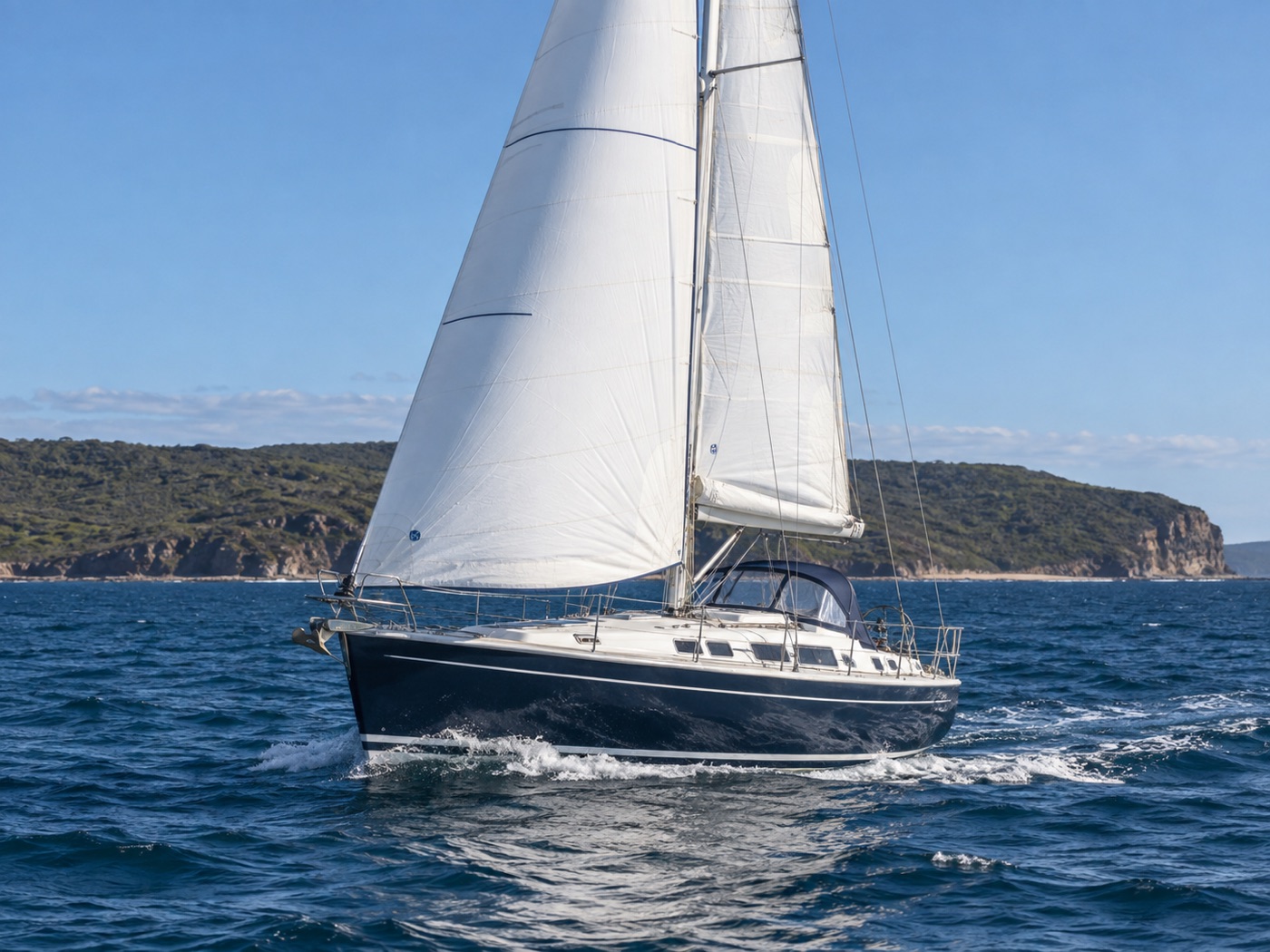
Short answer: for many cruising yachts, a 105–120% furling genoa balances power, tacking and visibility. The correct choice still depends on rig geometry, displacement, local wind, sheeting position and whether a Code sail covers light-air reaching.
Decide what the genoa must do
Start with the wind range and points of sail where the current inventory is weak. A large overlapping genoa can transform a heavier boat in light air, but creates higher sheet loads, more shroud contact and slower tacks. A smaller high-clewed sail improves visibility and reefed shape, yet may leave a performance gap below ten knots.
On a furler, ask how much area you genuinely intend to roll away. A foam or rope luff pad helps control draft as the sail is reduced, but a deeply reefed genoa cannot match the shape and load distribution of a purpose-built smaller jib. If stronger winds are common, consider whether the inventory needs a working jib or staysail instead of expecting one genoa to cover everything.
Buying a genoa by boat type
Cruising monohull
Prioritise furling reliability, UV protection, visibility and a cloth that retains useful shape. High-clewed designs clear waves and lifelines and often reef more cleanly.
Racing yacht
Specify exact wind-range crossover, LP, luff system and sheeting geometry. A race genoa should complement—not duplicate—the working jib and light-air inventory.
Cruising catamaran
Check whether the rig is designed around a self-tacking jib rather than an overlapping sail. High righting moment increases loads, while a Code Zero may be the better light-air addition.
Trailer sailer
Keep handling loads, storage, hanks or foil compatibility and class conventions in view. A modest genoa may deliver more usable days than a maximum-overlap sail.
Build the specification
Area, LP and clew height
LP is measured perpendicular from clew to luff and is usually expressed as a percentage of J. It describes overlap, not the complete shape. Clew height changes sheet lead, visibility and foot clearance. Ask for finished area as well as LP so competing quotes describe comparable sails.
Cloth and construction
Crosscut woven polyester is a durable, repairable choice for moderate cruising loads. Radial woven or laminate construction can improve load alignment and shape retention. Compare exact cloth product, weight, protective layers and the expected service environment—not simply “Dacron” versus “laminate.”
Furler and UV cover
Record the furler make, foil groove, available hoist, tack offset, top-swivel clearance and furling direction. The sacrificial cover must finish outside when fully rolled. In Australian exposure, specify cover material, thread and protection at the head and clew, where white sailcloth can remain exposed.
Sheeting and contact
Confirm the car track can produce the intended lead through the full wind range. Photograph spreader, shroud, pulpit and lifeline contact. Add protection only where needed; unnecessary patches increase weight and affect shape.
Genoa quote checklist
- Target wind range and sailing angles
- Finished luff, leech, foot, LP and area
- Cloth manufacturer, product code and weight
- Panel layout, reinforcement and seam construction
- Luff tape or hank specification and tack/head hardware
- Clew height, visibility panel and sheeting target
- Luff pad design and recommended reefing limit
- UV cover side, material, colour and thread
- Measurement, fitting, freight, adjustment and warranty
Reviewed 19 September 2026