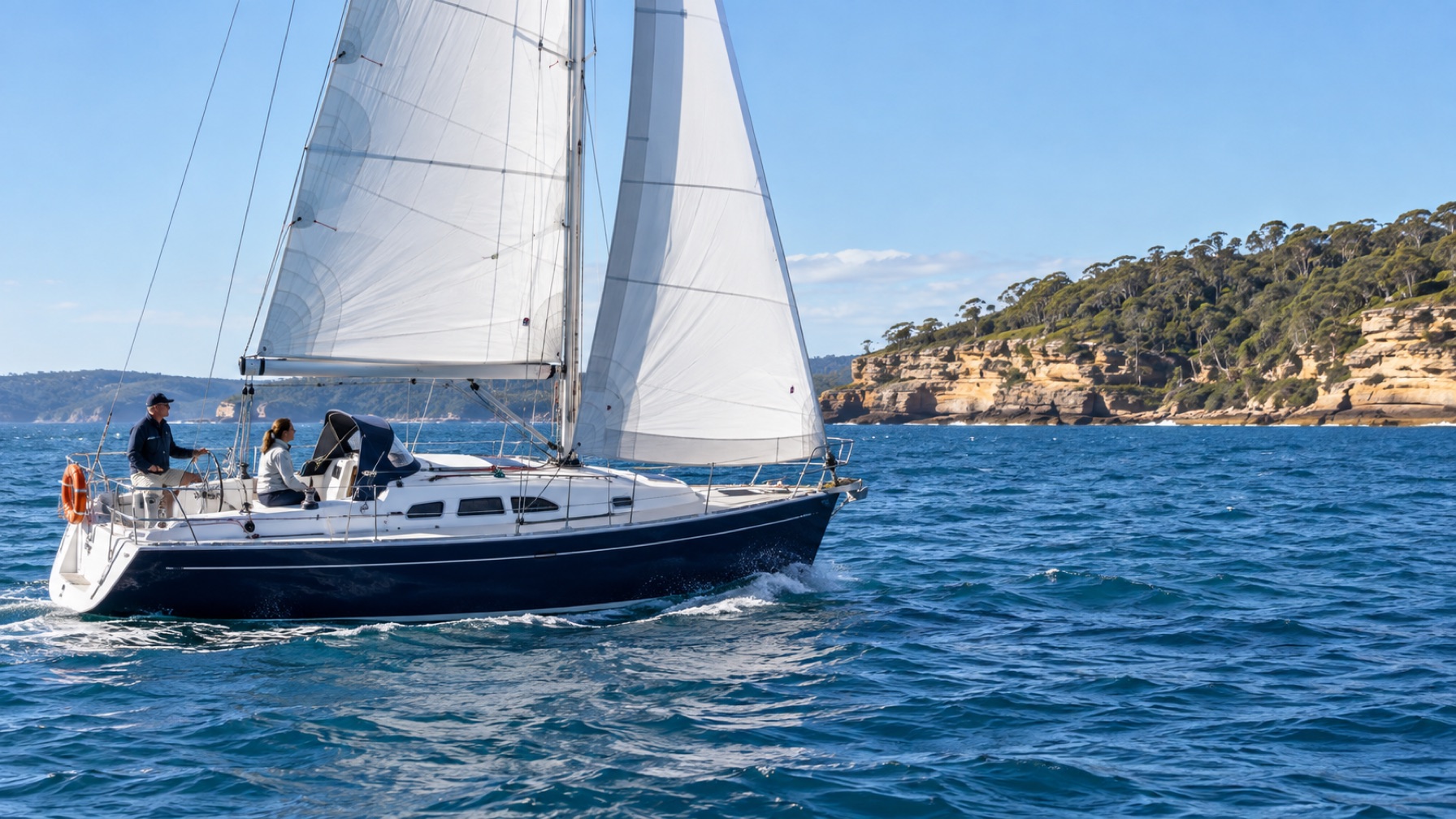
Short answer: Specify a controllable upper range, reefed balance and strong UV protection. Decide whether a moderate working headsail plus a dedicated light-air sail is more useful than one large furling genoa.
A useful local guide does not pretend every Perth boat needs the same sail. Start with boat-specific measurements and use regional conditions to test whether the proposed cloth, area, reefing and protection match the sailing you actually do.
Useful terms: UV cover, crossover and chafe.
Translate local conditions into a specification
The well-known summer sea-breeze pattern can put emphasis on depowering, leech control and reef systems, while morning and shoulder-season sailing still requires light-air shape. Swan River manoeuvring and offshore WA distances create different priorities, so state the actual mix clearly.
Build the brief from real sailing records where possible. Note the wind range in which the boat feels underpowered, balanced and overpowered; the points of sail used most; and the moments when the crew avoids setting or changing a sail. This evidence is more useful than choosing solely from a climate label.
Plan the whole inventory
River racers should focus on acceleration, repeatable trim and rapid changes. Coastal cruisers need durable cloth, secure reefs and an inventory that remains manageable when sailing short-handed. A furling Code Zero can fill lighter angles if the tack, halyard and furler are engineered for the load.
Draw a simple crossover chart for mainsail reefs, working headsails and reaching or downwind sails. Mark where two sails duplicate one another and where no safe, efficient option exists. Then set the next purchase around the largest genuine gap.
UV, moisture and storage
Strong sun and sails left on moorings demand complete sacrificial coverage and disciplined inspection. Consider cover fabric, thread, edge binding and chafe together. Sail bags and boom covers should ventilate while protecting from dust and extended exposure.
Ask the loft to identify every exposed panel when sails are furled or covered. Specify sacrificial materials and thread, then include annual inspection and cleaning in the ownership cost. The best protection is the one that is fitted correctly and checked before structural cloth is affected.
Compare sailmakers and loft service
Distance matters for WA cruising. Ask how remote measurements, freight, emergency repairs and warranty assessment work outside Perth. Keep cloth and hardware specifications documented so repairs can be discussed accurately from another port.
Obtain comparable written quotes. Each should identify finished dimensions and area, exact cloth, construction, reinforcements, hardware, covers, measurement, fitting, freight, warranty and adjustment process. A lower total can be poor value if essential commissioning or protection is excluded.
Compare each quote at the top of the normal afternoon range, not only at the light-air target. Ask how the sail flattens, what changes first and when the designer expects a reef or smaller headsail.
Shortlist checklist
- Describe the actual local and passage sailing program
- Record rig, deck hardware, furlers and all modifications
- Set target wind and angle ranges for every sail
- Compare exact cloth and finishing rather than generic names
- Confirm UV, chafe, moisture and storage protection
- Agree on measurement, fitting, adjustment and warranty responsibility
Frequently asked questions
What headsail size suits Perth cruising?
There is no single percentage. A moderate furling headsail often improves fresh-air handling, while a separate light-air sail can restore area when needed.
Do Perth sails need extra UV protection?
High exposure makes UV protection important. Specify the complete cover system and inspect thread and exposed corners regularly.
Should WA coastal cruisers prioritise repairability?
Yes, especially when travelling far from a home loft. Ask about common materials, spare hardware and temporary repair methods.
Reviewed 20 September 2026. This page provides regional context, not live business rankings or a substitute for boat-specific professional advice.