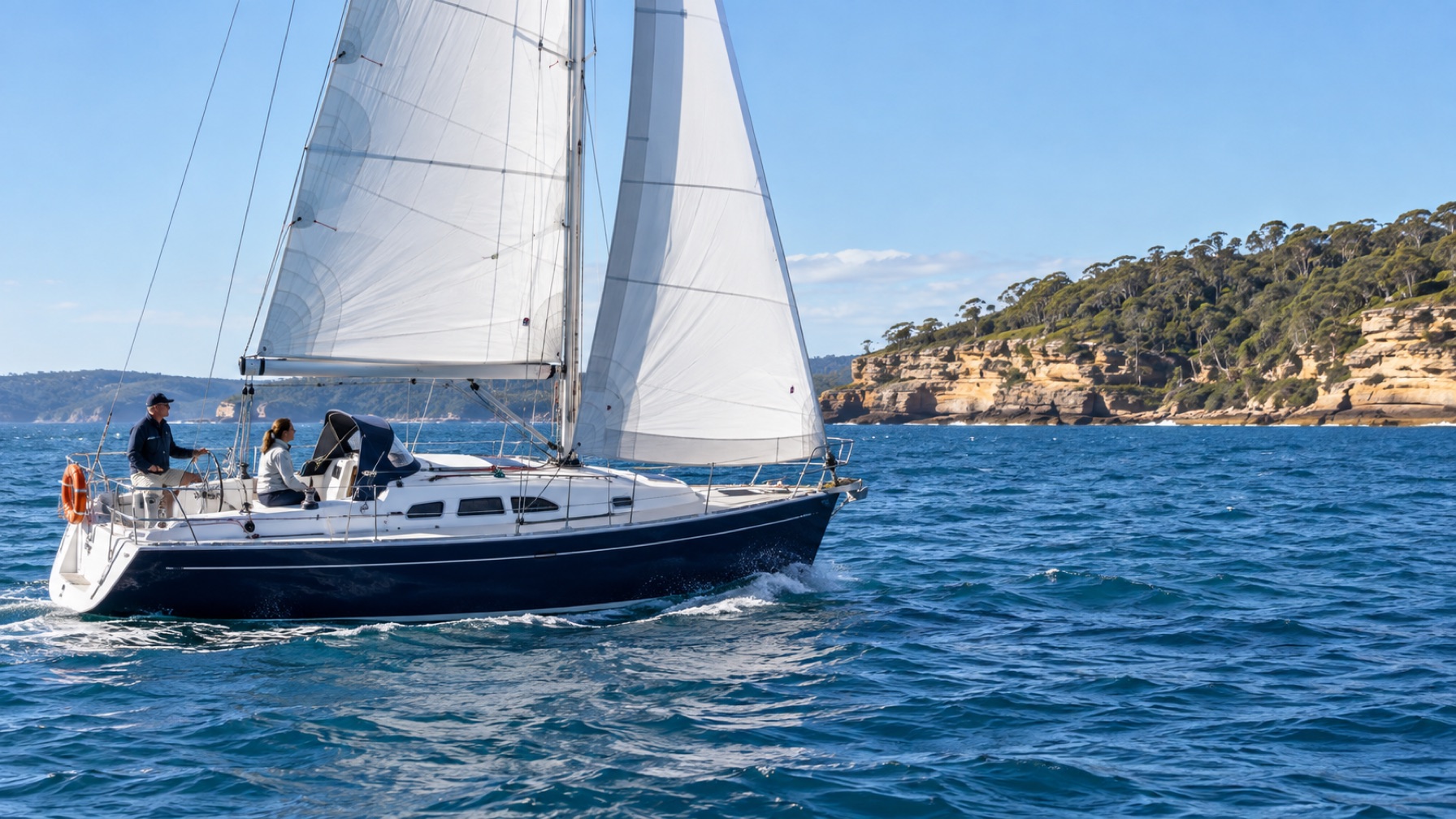
Short answer: Define whether most use is harbour racing, short-handed cruising or NSW coastal sailing. Prioritise shape through variable pressure, UV protection for furled sails and a fitting process that tests clearance and handling on the actual boat.
A useful local guide does not pretend every Sydney boat needs the same sail. Start with boat-specific measurements and use regional conditions to test whether the proposed cloth, area, reefing and protection match the sailing you actually do.
Useful terms: UV cover, crossover and chafe.
Translate local conditions into a specification
Sydney Harbour can combine light patches, sharp shifts and concentrated traffic, while offshore sailing introduces swell and longer loaded legs. Summer nor’easters and rapid southerly changes reward reefing and furling systems that the real crew can use early. A single average-wind specification is not enough.
Build the brief from real sailing records where possible. Note the wind range in which the boat feels underpowered, balanced and overpowered; the points of sail used most; and the moments when the crew avoids setting or changing a sail. This evidence is more useful than choosing solely from a climate label.
Plan the whole inventory
Harbour racers should define wind-range crossovers and manoeuvre frequency. Cruisers often benefit from a moderate working headsail, controllable mainsail reefs and a light-air reaching sail that is simple to furl or retrieve. Boats heading north or south should add heavy-weather coverage appropriate to their passage plans.
Draw a simple crossover chart for mainsail reefs, working headsails and reaching or downwind sails. Mark where two sails duplicate one another and where no safe, efficient option exists. Then set the next purchase around the largest genuine gap.
UV, moisture and storage
Year-round rigging and exposed moorings make sacrificial protection important. Check the genoa cover’s furling side, exposed head and clew, leech thread, mainsail cover fit and chafe at spreaders and pulpits. UV damage is cumulative even when the boat is not moving.
Ask the loft to identify every exposed panel when sails are furled or covered. Specify sacrificial materials and thread, then include annual inspection and cleaning in the ownership cost. The best protection is the one that is fitted correctly and checked before structural cloth is affected.
Compare sailmakers and loft service
A local measure and fit can be valuable where marina access, moorings and rig modifications complicate measurements. Ask who attends the boat, whether a sailing trial is included, how recuts are handled and where warranty work occurs. Compare that service alongside cloth and price.
Obtain comparable written quotes. Each should identify finished dimensions and area, exact cloth, construction, reinforcements, hardware, covers, measurement, fitting, freight, warranty and adjustment process. A lower total can be poor value if essential commissioning or protection is excluded.
Give each loft the same three sailing scenarios: a light harbour day, a fresh afternoon nor’easter and a coastal leg after a southerly change. The answers reveal how the proposed inventory is expected to work.
Shortlist checklist
- Describe the actual local and passage sailing program
- Record rig, deck hardware, furlers and all modifications
- Set target wind and angle ranges for every sail
- Compare exact cloth and finishing rather than generic names
- Confirm UV, chafe, moisture and storage protection
- Agree on measurement, fitting, adjustment and warranty responsibility
Frequently asked questions
Do Sydney boats need a large genoa?
Not universally. Harbour light air may favour area, but manoeuvring, summer pressure and short-handed tacks can favour a smaller working headsail plus a separate reaching sail.
Should I choose laminate sails for Sydney club racing?
Laminate can improve shape retention, but value depends on class, race hours, handling and storage. Compare the exact product and expected lifecycle.
Is local fitting worth paying for?
It can be, particularly on modified rigs, moored boats and complex furling systems. Clarify exactly what measurement, installation and adjustment the quote includes.
Reviewed 20 September 2026. This page provides regional context, not live business rankings or a substitute for boat-specific professional advice.