Choose a good woven polyester sail when toughness, straightforward repairs and handling tolerance matter most. Consider laminate or composite construction when lower stretch, reduced weight and longer aerodynamic shape life justify greater cost and more careful ownership. The exact product and construction matter more than the category name.
What buyers mean by Dacron
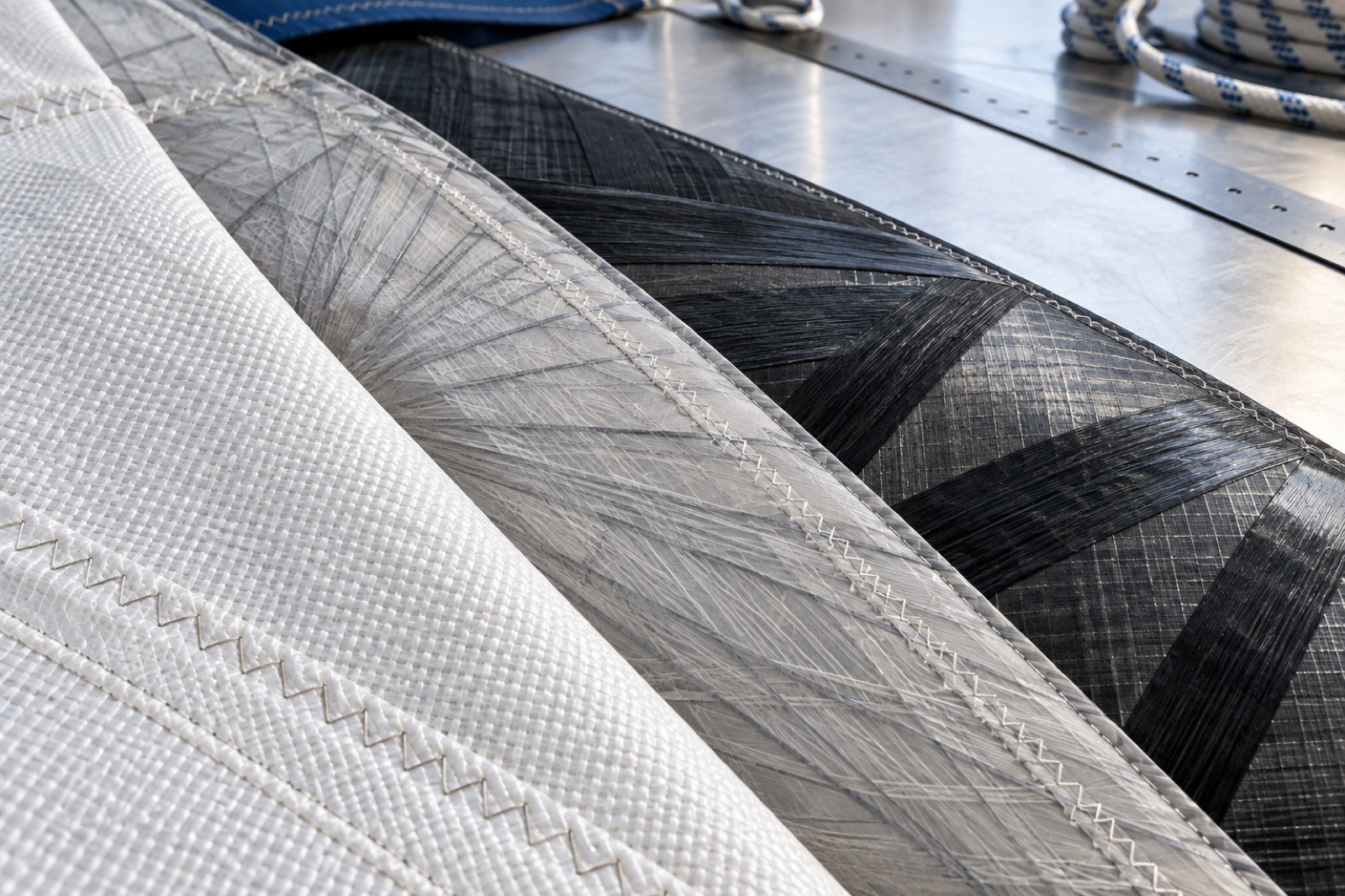
Dacron is a trade name commonly used for woven polyester sailcloth. Quality varies by yarn, weave, finish, weight and stability. A tightly woven, appropriately weighted cloth can give excellent cruising service. Do not compare a named laminate with an unspecified ‘Dacron’ option; request the manufacturer, product and finished weight for both.
What a laminate changes
A laminate aligns strong fibres between films or protective skins so the sail stretches less under working load. Better shape retention can reduce heel, preserve pointing and keep controls effective. Construction ranges from panel laminates to custom load-path structures, and protective taffeta can improve handling and abrasion resistance at a weight cost.
Durability has more than one meaning
Structural life asks whether the sail remains intact; aerodynamic life asks whether it still holds the designed shape. Woven cloth can remain serviceable after it has stretched enough to slow the boat. A laminate may hold shape better yet require closer attention to film, adhesive, flex and moisture. Compare both kinds of life against annual use.
Australian exposure and repair access
High UV, heat, salt, flogging and wet storage affect every material. Protective layers, thread and covers matter as much as fibre choice. For remote cruising, ask how the material is inspected, patched and repaired away from the original loft. For racing, calculate performance hours and replacement cycle rather than assuming the lightest option is best value.
Decision table
| Shape retention | Moderate; product and load dependent | Generally higher for equal design target |
|---|---|---|
| Handling tolerance | Usually forgiving | Varies; films and fibres need care |
| Weight | Usually higher | Can be lower |
| Repair familiarity | Widely understood | Depends on construction and damage |
| Best starting use | General cruising and value | Performance cruising and racing |
What to put in the brief
- Exact cloth manufacturer and product
- Finished cloth weight and protective layers
- Panel layout or load-path method
- Expected structural and shape life
- UV, flex and mildew care requirements
- Local and remote repair method
Frequently asked questions
Is Dacron always crosscut?
No. Woven polyester can be used in crosscut and radial constructions when the cloth is engineered for the chosen load direction.
Do laminate sails always delaminate?
No, but film, adhesive, flex, moisture and handling affect service life. Ask about the exact construction and inspection signs.
Are laminate sails only for racing?
No. Cruising laminates and protected composites target shape retention with durability features such as taffeta.
Which lasts longer?
It depends on what ‘lasts’ means, the specific product, loads, use and care. Compare both physical integrity and useful flying shape.
Prepared from the Buy Sails Australia research library and checked against the site’s measurement, material and provider methodology. Final boat-specific specifications and safety decisions require qualified sailmaker and rigger verification.
How this guide is researched