Bravo Sails on buying and caring for yacht sails
Luke from Bravo Sails explains how the Outer Harbor loft measures and builds sails, how racing and cruising briefs differ, and what owners should inspect before a repair becomes urgent.
What Australian sail buyers can learn
- A useful quote begins with the boat, crew, sailing program, budget and expected service life.
- The loft measures each yacht to its own production dimensions so responsibility for fit is clear.
- Offshore upgrades involve stitching, reinforcement and practical repairability—not simply heavier cloth.
- UV-exposed thread, corners, webbing, slides, bolt ropes and edge tapes deserve routine inspection.

Question 1
How did Bravo Sails come about, and how did the two of you come to be running it?
I have sailed, boatbuilt, repaired boats, rigged and sailmade since I could walk. I’ve worked professionally in all those roles.
In 2004, Adelaide Sail Loft started at Largs Bay. I bought into it and worked as production manager. In 2014 the loft needed a fresh start, so we bought it and changed the name to Bravo Sails. Anne and I manage the business together, and we train our staff in all aspects of sailmaking.
Question 2
What does being based at the Royal South Australian Yacht Squadron in Outer Harbor make possible?
Being located at the Squadron puts us close to most Adelaide yacht clubs. We can meet a customer on their boat to discuss needs or they can drop into the loft and talk through the options with us.
Question 3
What happens from the first conversation about a new sail to the finished sail leaving the loft?
All the sails we make are customised to what our customers need. The design is based on price, performance and longevity.
We talk about how the sail will be used and who will use it. We then measure, design and manufacture it locally.
Question 4
Why is measuring the boat yourself so important?
We measure the boat to the dimensions and finishing details we use. That gives us the best chance of making the sail fit correctly the first time.
Question 5
How differently do you approach a racing sail and a cruising sail?
A racing sail is designed for a more specific role. It is usually lighter, and its useful life is judged by how long it remains fast.
A cruising boat usually carries fewer sails, so each sail must work across a broader range. Cruising sails normally carry more weight and reinforcement, and are often used until something fails.
Question 6
How do you help an owner choose cloth without getting lost in the options?
We talk about what the owner needs, think through the trade-offs and select the cloth that fits the brief. Sometimes we quote a couple of options so the owner can compare them clearly.
Question 7
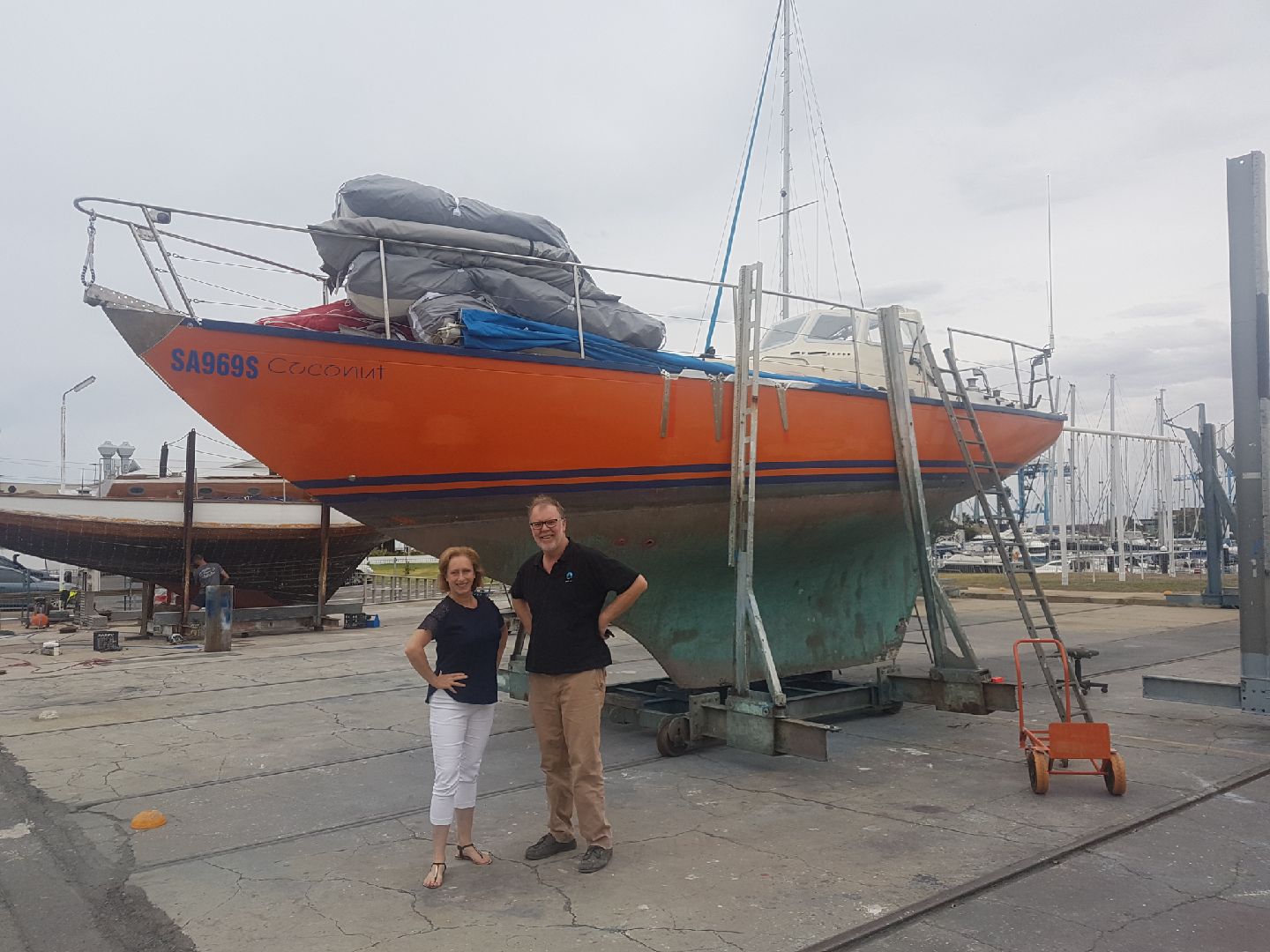
What did Coconut’s 2018 Golden Globe campaign teach you about ocean-ready sails?
Those sails are still travelling the world. They were built stronger, with heavier stitching and reinforcement. That takes more labour and adds cost, but there is no sail loft at Cape Horn.
Question 8
Did that project change how you specify long-range cruising sails?
It helped us develop what we call offshore upgrades. We also built a rainwater-catchment system into the boom bag, which is the kind of practical detail that matters on a long passage.
Question 9
How do sails and the rig need to work together?
They should work in harmony, especially the mainsail. Mast bend and forestay tension are part of controlling and depowering the sails, so the sail design cannot be separated from the rig setup.
Question 10
What matters in covers and canvas work for the Australian sun?
We prefer Teflon thread and Masacril fabric. We avoid binding tapes where possible, double-roll the edges and use three layers around eyelets. Those details help the finished cover tolerate UV and load.
Question 11
How do you decide whether a damaged sail should be repaired or replaced?
We spread the sail out on the loft floor and inspect it properly. Then we discuss the repair-versus-replacement options, the likely short- and long-term result, and the owner’s budget.
Question 12
What should owners inspect if they want their sails to last?
Check stitching exposed to sunlight and load. Scratch the thread: if it turns to powder, or if the sunny-side row has become a line of holes, the repair is urgent.
Also inspect corners, webbing, slides, bolt ropes and edge tapes. Pack sails dry and neatly, and deal with small problems before they spread.
Question 13
What is the biggest mistake owners make when ordering or replacing sails?
Rushing the decision and relying on too much well-meaning advice without asking the sailmaker. People naturally recommend the setup that works on their own boat, but it may not transfer to yours.
Questions to carry into every sail quote
Who owns the measurements?
Confirm who checks the boat, hardware and finished dimensions—and who is responsible if the sail does not fit.
What is the intended useful life?
Ask how the quoted cloth, weight, stitching and reinforcement suit your real UV exposure, loads and storage routine.
What is included beyond the cloth?
Compare finishing, covers, hardware, reefs, commissioning, freight, after-sales support and repair access.