Noelex 25 sail buying example
The Noelex 25's fractional rig, comparatively large mainsail and non-overlapping headsail make mainsail shape, reefing and easy headsail handling central to the brief.
Read the worked example →See how platform, rig, crew and sailing program change the buying questions—without pretending published dimensions replace measuring the boat.
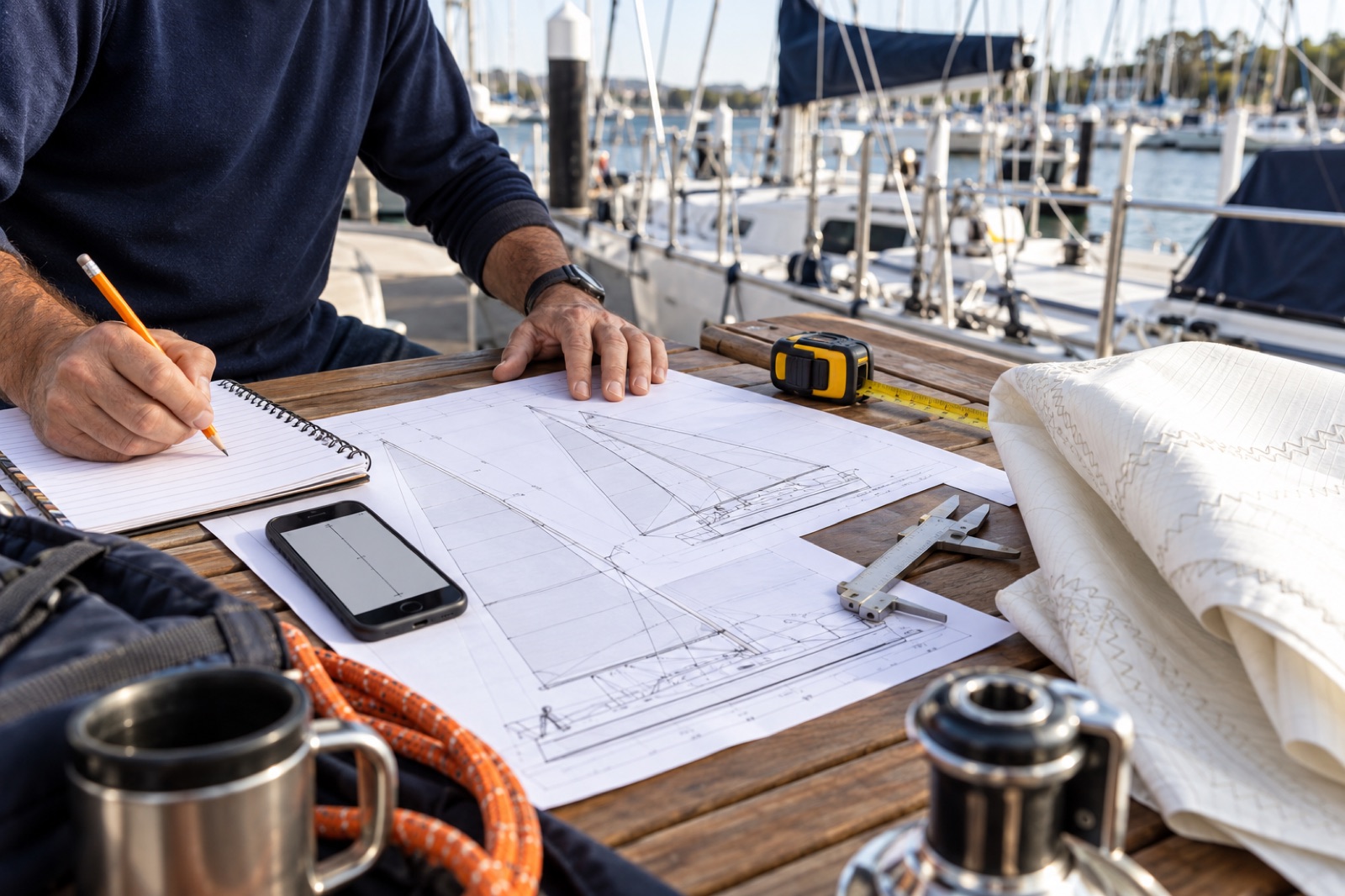
Each page starts with published reference information, then separates what is likely to matter from what must be measured. The owner scenarios are clearly hypothetical and show how to turn priorities into a comparable quote brief.
The Noelex 25's fractional rig, comparatively large mainsail and non-overlapping headsail make mainsail shape, reefing and easy headsail handling central to the brief.
Read the worked example →An Adams 10 purchase should connect the sail design to class compliance, mast bend, crew workflow and measurable crossover targets.
Read the worked example →The Seawind 1000 combines cruising-catamaran loads with a practical short-handed inventory, making mainsail reefing and headsail crossover key decisions.
Read the worked example →An Oceanis 38.1 brief must identify the exact sail-plan and deck-hardware configuration before published model dimensions are used.
Read the worked example →The Catalina 320's masthead rig makes headsail area and handling central, while keel, furler and owner modifications mean the actual boat must still define the cut.
Read the worked example →A Sun Odyssey 349 buyer must identify the exact rig, keel and mainsail configuration before using published model figures or choosing an easier-handling inventory.
Read the worked example →The Bavaria Cruiser 34 has materially different standard and furling mainsail areas, so identifying the installed system is more important than quoting the model name alone.
Read the worked example →The Lagoon 380's large full-batten mainsail and broad multihull load case make track condition, reefing and actual rig configuration essential parts of the sail purchase.
Read the worked example →A J/24 sail purchase begins with current class compliance and certified measurement; performance choices sit inside those limits rather than replacing them.
Read the worked example →Sydney 38 sails must connect class measurement and sail-management rules with offshore reliability, repeatable trim and the campaign's replacement priorities.
Read the worked example →The Farr 1020's fractional rig and performance-oriented sail plan reward a brief that joins rig tune and inventory crossover with cruising durability and handling.
Read the worked example →Top Hat 25s span multiple marks and decades of owner changes, so a simple, durable inventory must begin with identifying and measuring the individual Australian-built boat.
Read the worked example →