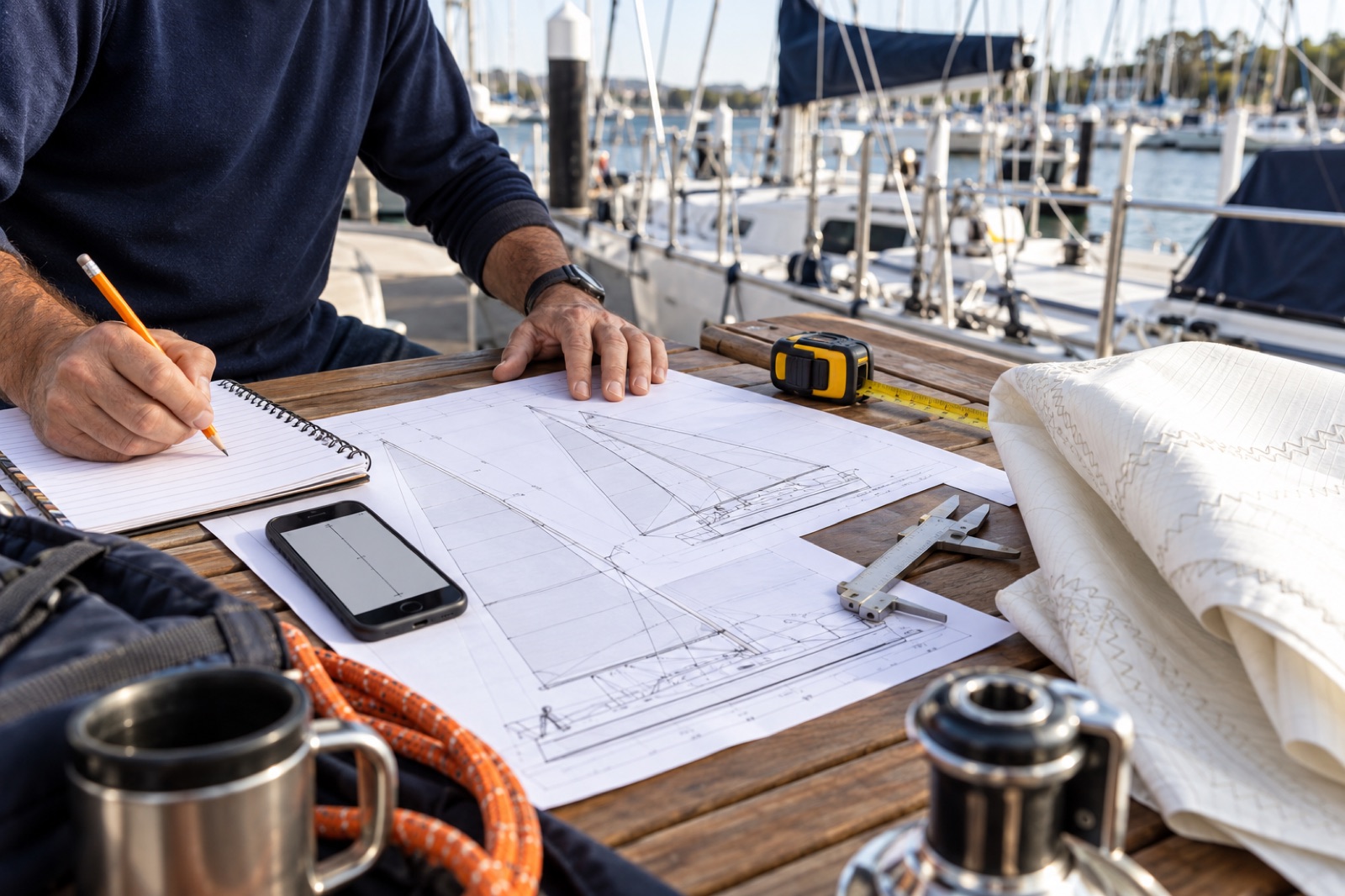
Short answer: An Oceanis 38.1 brief must identify the exact sail-plan and deck-hardware configuration before published model dimensions are used. Use published data to check plausibility, never to approve final sail dimensions.
Published model reference values
| Published LOA | 11.80 m |
|---|---|
| Published beam | 3.99 m |
| Published light displacement | 6,850 kg |
| Published mainsail area | 32.70 m² in the cited brochure |
Rig changes, furlers, mast rake, hardware, class updates and previous owner work can change the usable luff, foot, clew and sail controls. The sailmaker should reconcile the actual boat, existing sails and current rules.
Define the replacement sail's job
Production models often have optional layouts, rig details and owner modifications. The Oceanis 38.1 was offered with different configuration choices, so the model name is not a measurement form. Begin with the boat's hull and rig identifiers, then record the installed mast, boom, furling system, arch or mainsheet arrangement, tracks and current sails.
What the sailmaker needs to verify
For short-handed cruising, compare the practical reefing system, headsail size, visibility and light-air gap. A moderate furling headsail may be the dependable everyday sail, while a separate reacher covers angles where it loses power. The mainsail specification should address luff hardware, reef positions, lazy-bag fit and backstay clearance on the actual configuration.
- Exact model year, mast and sail-plan option
- Furler, luff tape and maximum hoist
- Mainsheet, arch and boom geometry
- Track range, lifeline and spreader clearance
- Reef hardware and lazy-bag opening
- Existing-sail dimensions checked against boat measurements
Worked buyer scenario
Hypothetical owner: a coastal cruising couple wants less effort without accepting poor light-air performance. They measure the installed rig, select a controllable furling headsail for normal tacking, retain clear reefing steps in the mainsail and ask whether a furling reacher is a better answer than extra genoa overlap. Every quote receives the same photographs and hardware schedule.
Questions to put in the quote brief
- Which actual-boat measurements will you take or require the owner to take?
- What exact cloth, weight, construction and reinforcement are proposed?
- What full-size and reduced wind range is the sail designed to cover?
- Which hardware, covers, freight, fitting and commissioning are included?
- How are fit adjustments, recuts, repairs and warranty handled in Australia?
Sources and verification
Published values above were checked against these references. Confirm current rules and manufacturer information before relying on them.