Short answer: Top Hat 25s span multiple marks and decades of owner changes, so a simple, durable inventory must begin with identifying and measuring the individual Australian-built boat. Use published data to check plausibility, never to approve final sail dimensions.
Published model reference values
| Published LOA | 7.62 m |
|---|---|
| Published beam | 2.44 m |
| Published displacement | 2,540 kg |
| Published sail area | 26.57 m² |
Rig changes, furlers, mast rake, hardware, class updates and previous owner work can change the usable luff, foot, clew and sail controls. The sailmaker should reconcile the actual boat, existing sails and current rules.
Define the replacement sail's job
The Top Hat 25 is a compact masthead cruiser-racer with multiple marks, builders and owner-completed details. The best replacement is usually defined by simple handling, useful shape in moderate area and repairable construction rather than a database maximum. Owners should first decide whether the boat is primarily used for protected-water days, coastal cruising or club racing.
What the sailmaker needs to verify
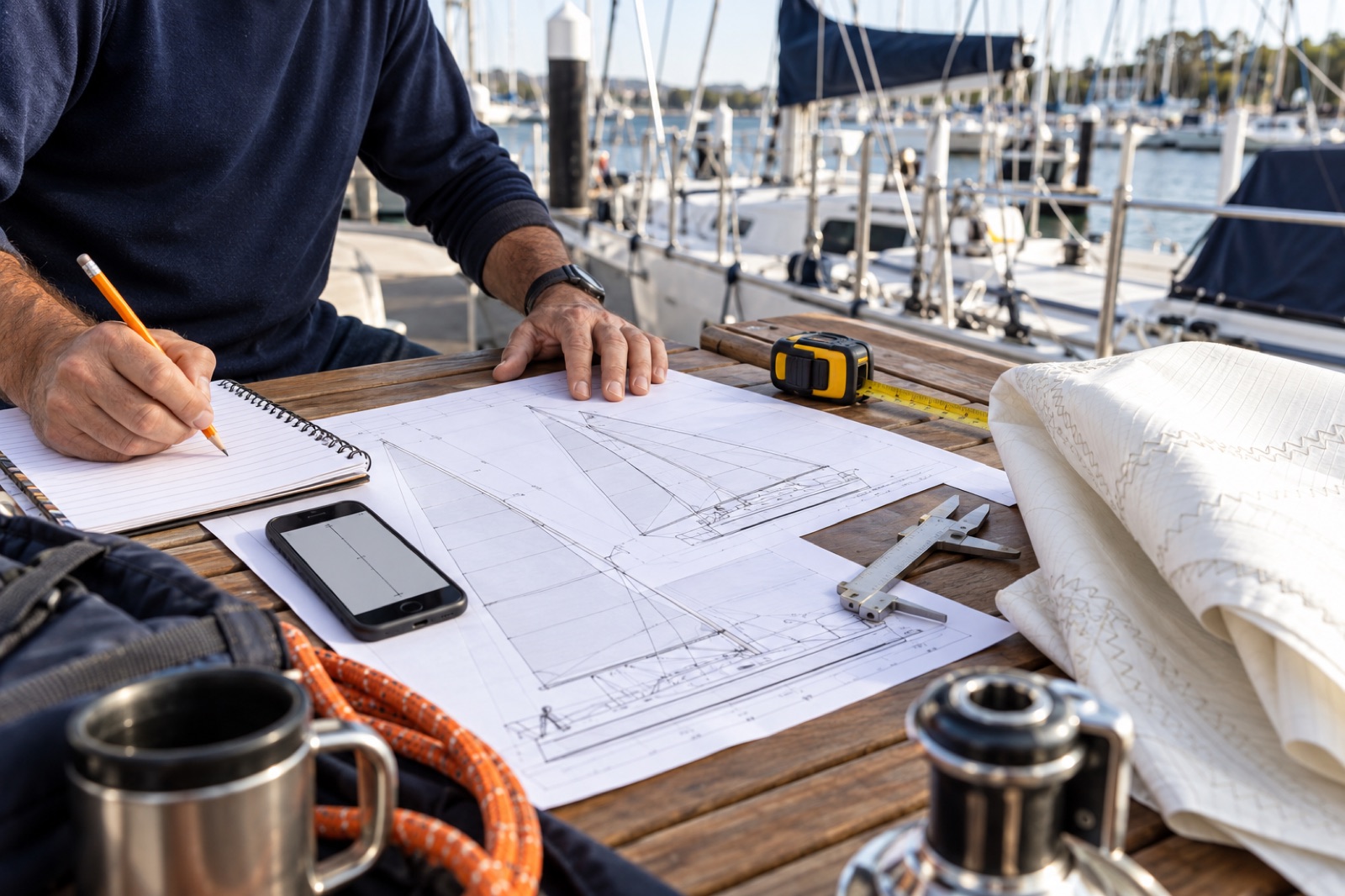
Identify the mark, builder, mast and boom, then measure the rig as stepped and tensioned. Check forestay, hank or furler, tack height, tracks, lifelines, backstay, gooseneck, slugs, reef hooks and clew hardware. The association's historical specifications establish context, but decades of modifications make hardware photographs and actual measurements essential.
- Top Hat mark, builder and known modifications
- Stepped-rig mast, boom and forestay measurements
- Hanks or furler and headsail tack geometry
- Track range, lifelines and clew clearance
- Mainsail slugs, backstay and reef hardware
- Storage, folding and local repair requirements
Worked buyer scenario
Hypothetical owner: a Sydney-based Top Hat 25 is sailed by one or two people and still carries a large, tired hanked genoa. The owner compares a manageable working jib or moderate genoa, retains simple hanks for dependable drops and specifies a woven mainsail with a tested reef. The buying brief values local repairability and easy packing below.
Questions to put in the quote brief
- Which actual-boat measurements will you take or require the owner to take?
- What exact cloth, weight, construction and reinforcement are proposed?
- What full-size and reduced wind range is the sail designed to cover?
- Which hardware, covers, freight, fitting and commissioning are included?
- How are fit adjustments, recuts, repairs and warranty handled in Australia?
Sources and verification
Published values above were checked against these references. Confirm current rules and manufacturer information before relying on them.