Inputs
Crew size, usual wind range, priority and rig layout describe the handling problem before size is discussed.
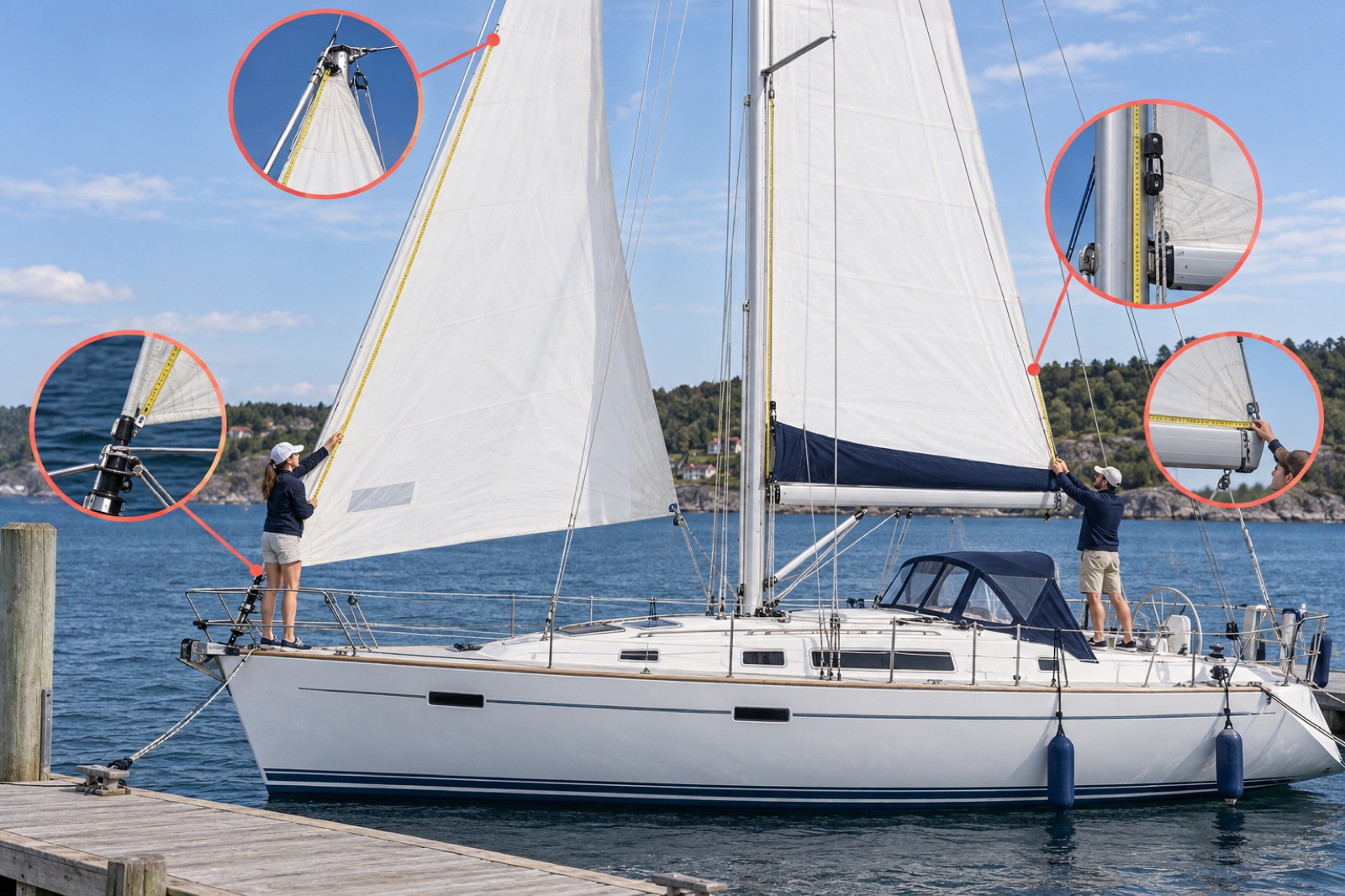
Start with the headsail’s job and sheet-track geometry, then verify area, clew height and useful reefing range.
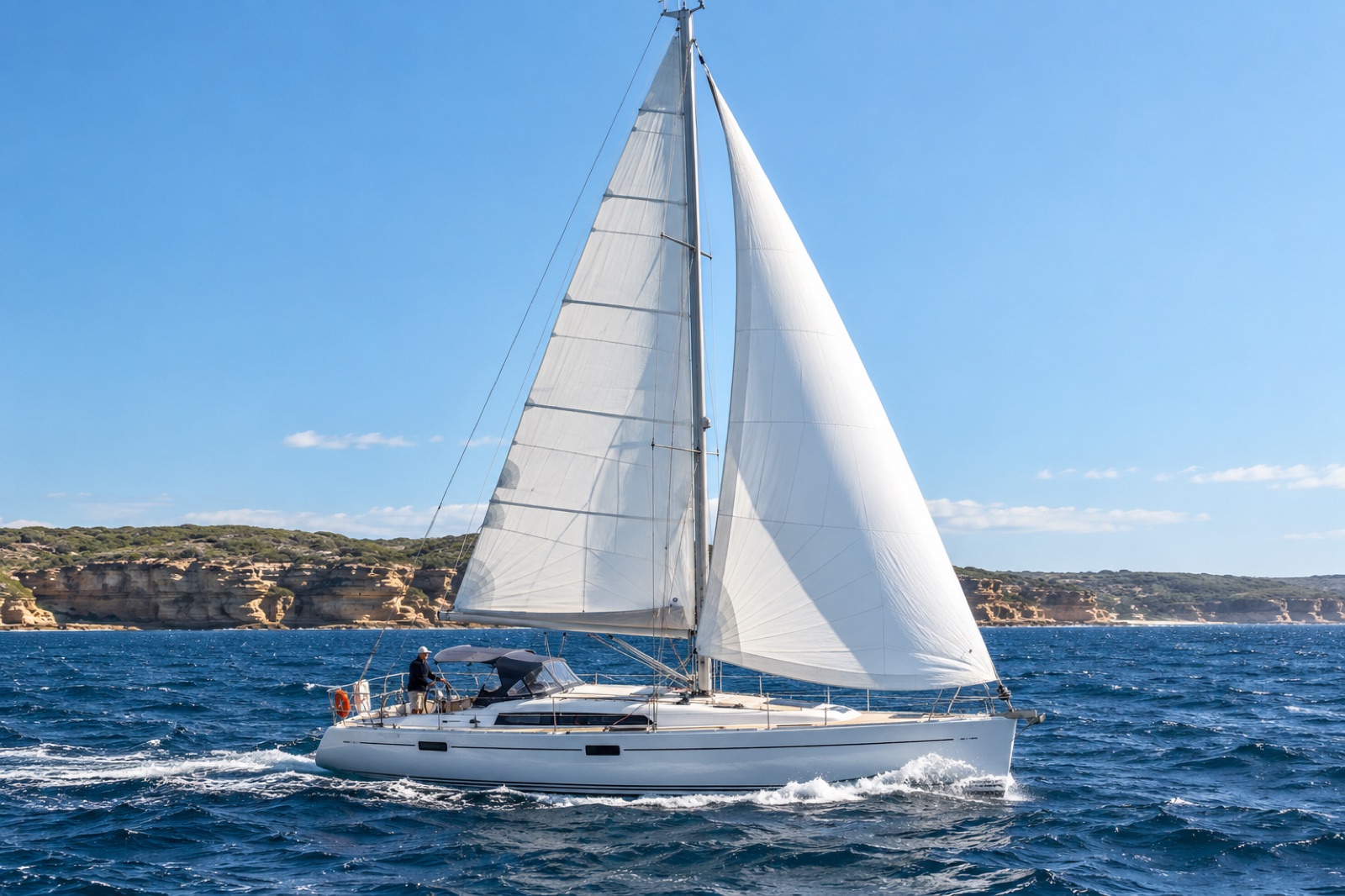
A high-clew 105–110% furling headsail may give easier tacking and visibility, with a separate reacher covering light-air power.
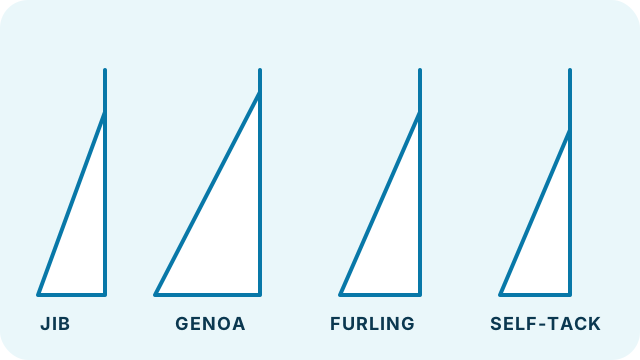
It compares the everyday jobs of a working jib, overlapping genoa, furling headsail and self-tacking jib.
Crew size, usual wind range, priority and rig layout describe the handling problem before size is discussed.
The tool weighs tacking effort, visibility, light-air power, partial-furling needs and the physical layout of the rig.
Use the result to define the headsail's job and then verify LP, luff, clew, tracks and furler. A separate reaching sail may cover light-air power more effectively than greater overlap.
A short-handed fractional cruiser in mixed conditions may start with a high-clew 105–110% furling sail, then add a reacher if a genuine light-air gap remains.
This tool supports briefing and comparison. It does not replace measurement on the boat, structural engineering, class or safety rules, or a sailmaker's final design.