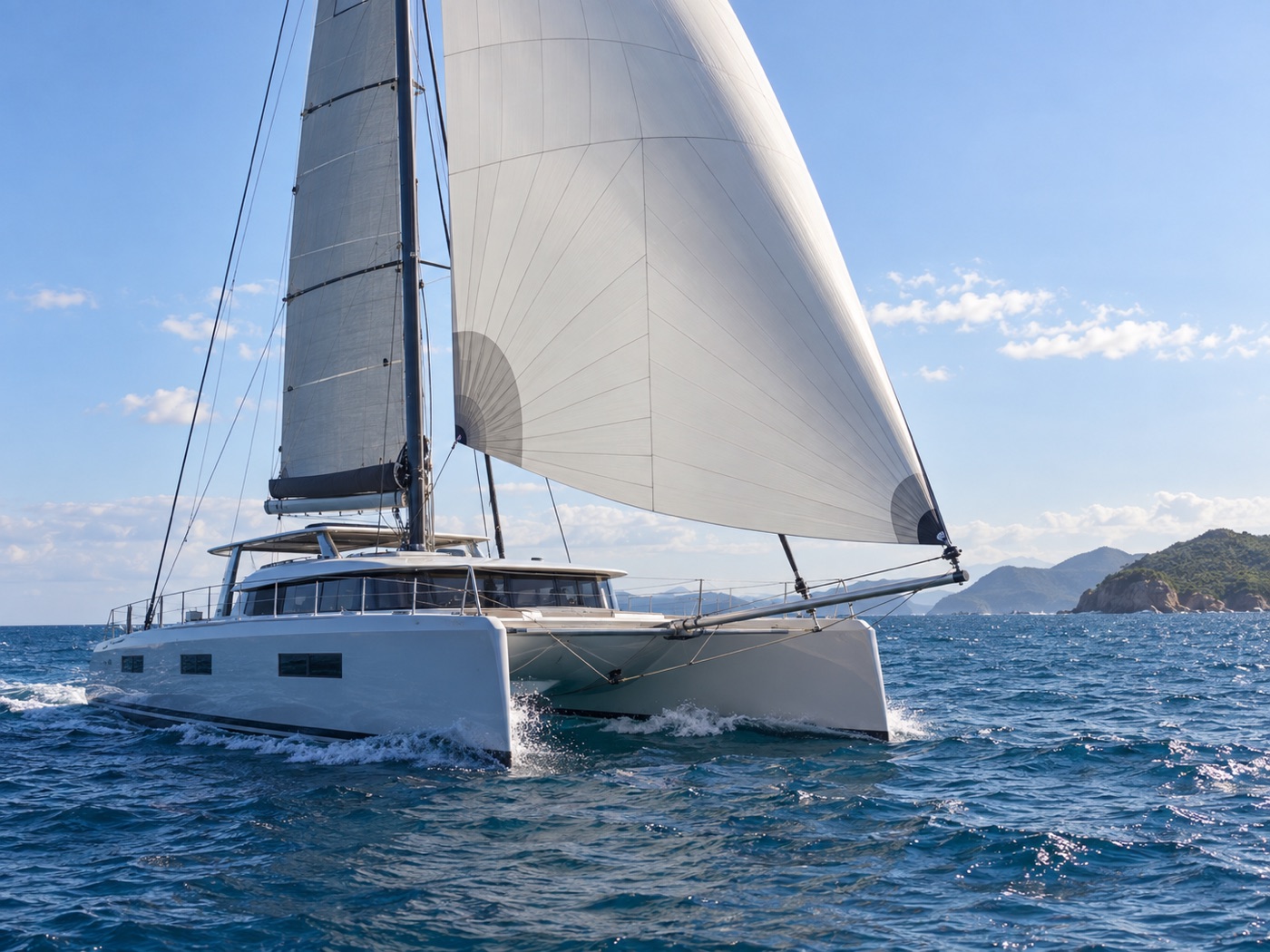
Short answer: buy a Code Zero when the boat lacks power reaching in light-to-moderate air and the existing genoa and asymmetric leave a genuine angle gap. Do not buy one solely because the name sounds versatile.
Define the target range
Begin with a simple inventory chart showing true wind speed and apparent wind angle. Record when the genoa loses stable drive as the boat bears away and when the asymmetric begins to fill. The Code sail belongs in the gap. A flatter, tighter-luffed sail reaches higher; a deeper sail provides more power at wider angles. Those designs should not be compared as if they are interchangeable.
For racing, confirm measurement-rule definitions before approving mid-girth, area and luff structure. For cruising, ease of deployment and a forgiving range usually matter more than squeezing the sail into a particular rating category.
Buying a Code Zero by boat type
Cruising monohull
A moderate-area furling Code sail can transform light-air passage speed. Keep the operating range conservative and choose a bag and furling routine the watch crew will use.
Racing yacht
Design around the measured crossover and rule constraints. Specify whether the sail is an upwind Code sail, tight reacher or broader reaching complement.
Cruising catamaran
Often a high-value addition because a self-tacking jib leaves limited light-air area. Fast apparent-wind sailing requires a stable luff and strong sprit, tack and halyard structures.
Trailer sailer
Check whether the rig, deck attachment and crew justify the added cable and furler. On smaller boats, an asymmetric may provide broader value with less luff load.
The sail, cable and furler are one system
A bottom-up furling Code Zero normally depends on a structural or anti-torsion luff that begins rolling from the tack. The cable, drum and top swivel must match sail size and load. Ask whether the cable is integral or removable, what halyard tension is required and how the rolled sail is lowered and stored.
Some deeper reaching sails use top-down furling instead. Do not assume a furler intended for an asymmetric is automatically correct for a tight-luffed Code sail. Get the sailmaker and hardware supplier to confirm compatibility.
Rig and bowsprit loads
Code sails can create substantial forestay-like loads. Verify bowsprit working load, tack attachment, halyard exit, mast compression and whether the rig needs a 2:1 halyard. A prodder designed only to position an asymmetric tack may not be suitable for a highly tensioned Code sail.
Cloth and exposure
Low-stretch radial laminate or purpose-built reaching cloth helps hold luff and draft shape. A Code sail that lives aloft needs different UV protection from one lowered after every use. Extra cover weight changes light-air performance, so storage expectations belong in the original brief.
Code Zero quote checklist
- Target apparent-wind angles and true-wind speeds
- Crossover against genoa, jib and asymmetric
- Finished area, mid-girth and luff geometry
- Cloth product, weight and panel layout
- Integral or removable torsion cable specification
- Bottom-up or top-down furler and safe working load
- Bowsprit, tack, halyard and mast-load confirmation
- UV exposure, storage bag and handling method
- Operating limits and commissioning procedure
Reviewed 19 September 2026