Inputs
P and E define the base triangle. Reef reductions are approximate vertical luff reductions, not distances along the leech or positions copied from another sail.
This simplified geometric estimate cannot determine safe reef locations, loads, balance or hardware engineering.
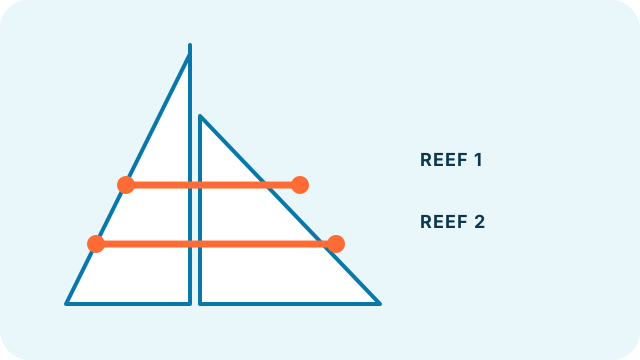
With P 13.2 m and E 4.5 m, the triangular base area is 29.7 m². Reducing effective luff to 11.4 m gives about 25.7 m² before leech geometry; 9.8 m gives about 22.1 m².
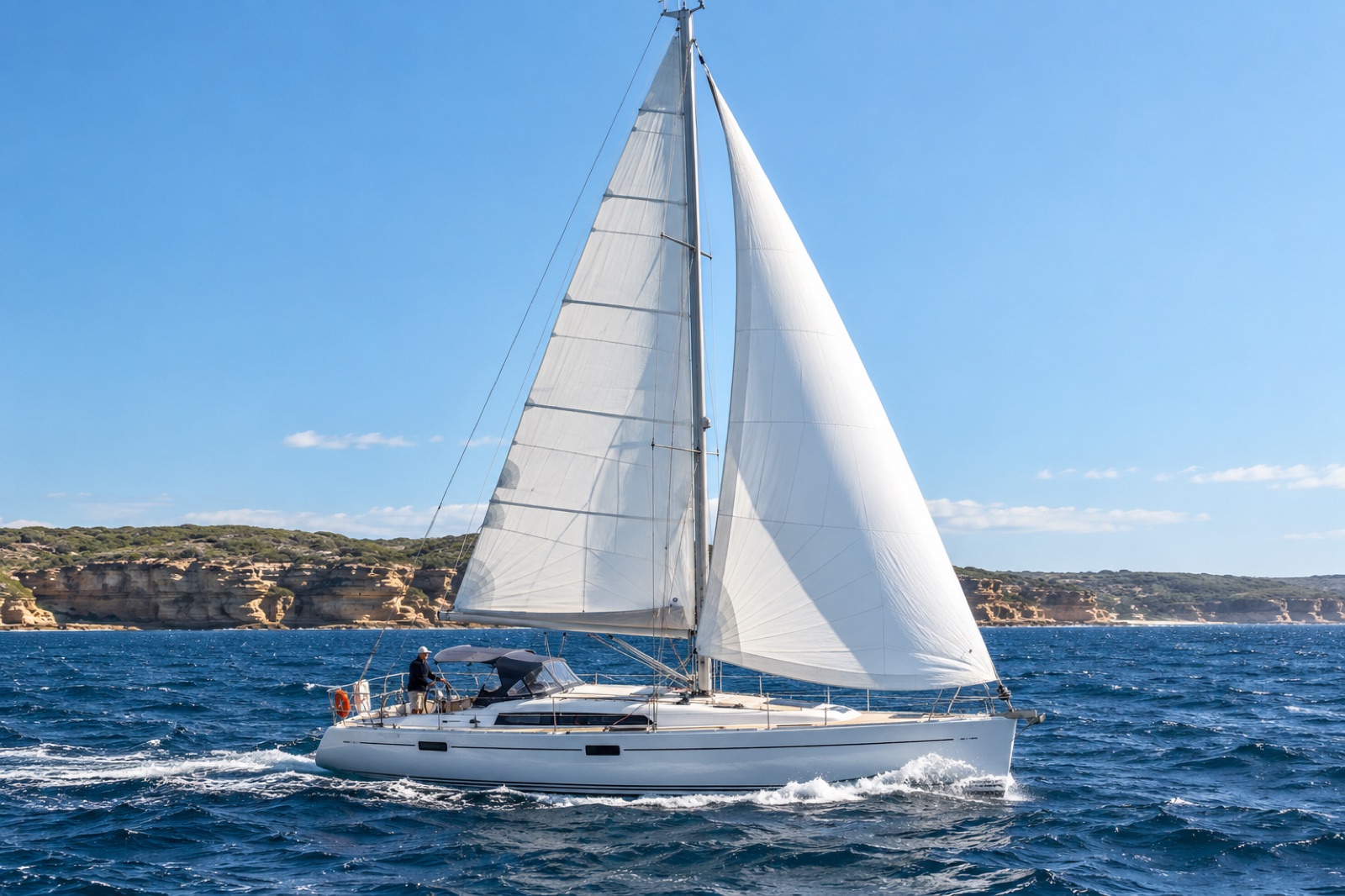
It shows how simplified mainsail area falls as the effective luff is shortened at each reef.
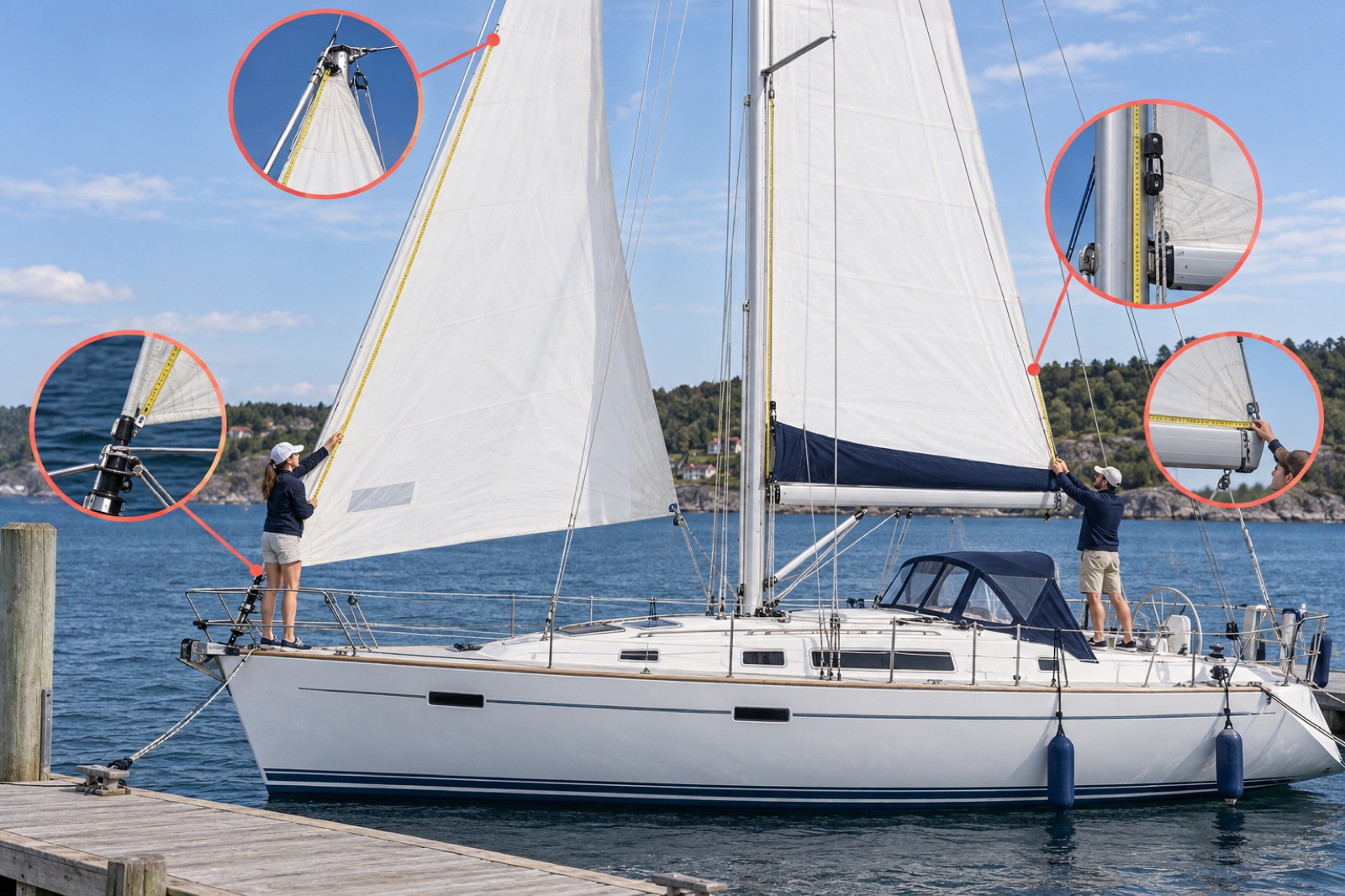
P and E define the base triangle. Reef reductions are approximate vertical luff reductions, not distances along the leech or positions copied from another sail.
Base triangle = ½ × P × E. At each reef, P is reduced by the entered vertical amount and the simplified triangle is recalculated.
Use the comparison to ask about reef depth and balance. The tool cannot calculate safe loads, real reefed geometry, leech position or the headsail combination.
With P 13.2 m and E 4.5 m, base area is 29.7 m². Effective luffs of 11.4 m and 9.8 m give simplified areas of 25.7 m² and 22.1 m².
This tool supports briefing and comparison. It does not replace measurement on the boat, structural engineering, class or safety rules, or a sailmaker's final design.